April is the month Israel performs at full volume. Two of the world’s great religious calendars — the Jewish Passover and the Christian Easter — converge here with a frequency that is hard to find anywhere else, filling Jerusalem’s stone streets with pilgrims, families, and an atmosphere both ancient and intensely alive. By the month’s end, Israel Independence Day has turned the entire country into a national party. In between, the Galilee’s wildflowers are reaching their last peak, the Dead Sea is perfectly warm for floating, and the Mediterranean beach season has just opened. April demands advance planning. It rewards it.
Passover in Jerusalem
Passover (Pesach) is the most widely observed Jewish holiday — the eight-day commemoration of the Exodus from Egypt — and no city observes it more intensely than Jerusalem.
The Seder nights
The first and second nights of Passover are the Seder nights: ritual meals in which the Haggadah (the Passover story) is read, four cups of wine are drunk, and the symbolic foods of the Exodus are shared. In Jerusalem, public Seders run at major hotels — the King David, the Mamilla Hotel, the American Colony, and many others hold Seder dinners for hundreds of guests including tourists. These are significant events: formal, musical, multi-hour affairs that offer a genuine entry point into the tradition for visitors with no family to host them. Book months ahead.
The Western Wall on the first Shabbat of Passover hosts an enormous Kabbalat Shabbat — tens of thousands of people in white fill the plaza for the Friday-evening prayers during the intermediate days. If you are in Jerusalem on a Passover Shabbat, this is one of the great sights of the city.
Chametz and what to eat
During Passover week, Israel removes leavened bread (chametz) from its public life. Supermarkets seal entire aisles; most Israeli restaurants serve exclusively Pesach menus without bread or pasta. Matzah — the unleavened cracker of the holiday — appears everywhere.
For tourists: this is not a hardship. Israeli hotel buffets switch to full Passover menus with exceptional variety. Tel Aviv’s non-kosher restaurants in Florentin and southern Tel Aviv continue serving bread (legal requirement is only that it not be visible in public-facing areas). Arab restaurants in East Jerusalem, Akko, Nazareth, and elsewhere are entirely unaffected by Passover food restrictions. The Israeli cuisine guide covers the full dietary landscape.
Practical considerations
- Book 4–6 months ahead. Jerusalem hotels in the Passover/Easter window sell out. This is not a warning; it is a rule.
- Prices rise 40–60%. A room that costs ₪700 in November may cost ₪1,100–1,200 in Passover week. Budget accordingly or consider Dead Sea hotels or Eilat as alternatives with similar holiday access.
- National Parks are open and popular on chol hamoed (the intermediate days of Passover). Masada, Ein Gedi, and Caesarea are all excellent Passover-week choices.
- Intercity transport is enhanced during chol hamoed, with extra services added on the key routes.
The dedicated Passover in Israel guide covers the full logistics.
Easter in Jerusalem
Easter in Jerusalem is the world’s most historically grounded setting for the holiday — and the most logistically demanding. The key is preparation.
Good Friday: the Via Dolorosa procession
The Franciscan Via Dolorosa procession on Good Friday is one of Jerusalem’s most powerful public events. Starting from the First Station near Lions’ Gate in the Muslim Quarter, the procession walks the 14 Stations through the Old City’s winding lanes to the Church of the Holy Sepulchre, typically departing at 3:00pm and arriving an hour later. The streets are packed; position yourself at a station before 2:30pm.
Verify the current year’s exact schedule and route details with the Franciscan Custody of the Holy Land before travelling.
Easter Sunday at the Church of the Holy Sepulchre
The Church of the Holy Sepulchre on Easter Sunday draws pilgrims from across the world into a small space. For meaningful access:
- Arrive by 5:00am for any chance of entering the Aedicule (the tomb chamber itself) — it opens at 4:00am with queues forming before midnight.
- Arrive by 6:30am to position yourself in the main rotunda before the Patriarchal procession at approximately 9:30am.
- Arrive at 9:00am if you simply want to be present for the atmosphere without accessing the Aedicule.
The Garden Tomb (East Jerusalem, Protestant tradition, 10-minute walk from the Old City’s Damascus Gate) offers a quieter Easter Sunday experience: the sunrise service begins at 6:30am and the site is open throughout the day with a more reflective atmosphere than the Church of the Holy Sepulchre. Many pilgrims visit both.
Nazareth is home to Israel’s largest Christian Arab community, and Easter carries a particularly warm resonance here. The Basilica of the Annunciation hosts Easter Sunday mass; the streets of the Old City take on a festive character. A Nazareth Easter visit gives a very different perspective from Jerusalem — more intimate, more local — and is easily combined with a Galilee day trip. See the Nazareth travel guide for full logistics.
Wildflowers: the Galilee’s April peak
The Darom Adom anemone bloom that draws photographers to the Negev in January–March is largely over by April, but the Galilee replaces it with a different wildflower picture.
What blooms in April
Orchids (Ophrys, Orchis, and Serapias species) reach their peak across the Galilee and Carmel hills in April — Israel has over 50 native orchid species, and the limestone hillsides above Nazareth, in the Carmel hills, and in the Upper Galilee are dotted with them in April. Orchid walks are a specialist interest but the flowers are scattered enough to encounter on any Galilee walk.
Cyclamens (cyclamens are found across the Galilee in pink and white) and anemones (in the Galilee and Judean hills, later than the Negev) continue into early April. By the end of April, summer annuals are taking over and the green carpet is beginning to brown.
The Jerusalem Forest and Judean Hills are at their most attractive in April: the landscape is still green from winter rains, the light is warm but not harsh, and the countryside around Jerusalem — from Ein Kerem village to Sataf Springs — is genuinely beautiful. The Israel hiking guide covers Galilee trails well-suited to April conditions.
Yom HaShoah: Holocaust Remembrance Day
Yom HaShoah falls on 27 Nisan — typically in April or sometimes May, shifting annually with the Hebrew calendar. In 2026, it fell on April 20. Verify the current year’s date at yad-vashem.org.
At 10:00am, a two-minute siren sounds across Israel. The country stops. Drivers leave their cars. Conversations stop. Pedestrians stand still on pavements. The silence is one of the most resonant two minutes you will experience anywhere — a whole country pausing together. For tourists, the right response is simply to do what those around you do: stop, stand still, stay quiet.
Yad Vashem (the World Holocaust Remembrance Centre in Jerusalem, free entry) holds its central national ceremonies on Yom HaShoah eve and morning. If you plan to visit, the day of or day before is the most emotionally significant; the day after offers a quieter, more reflective visit. Pre-registration for Yad Vashem is always recommended; see the Yad Vashem visitor guide for booking and practical logistics.
Entertainment venues, some restaurants, and cinemas operate with significantly reduced hours or close entirely on Yom HaShoah. Plan for a quiet, reflective day rather than an activity-heavy itinerary.
Yom HaAtzmaut: Independence Day
Israel’s Independence Day is a masterclass in emotional contrast. The day before, Yom HaZikaron (Memorial Day for fallen soldiers and victims of terrorism), is the most solemn day of the national calendar: sirens, military cemeteries, weeping families. Then at sunset, within seconds of the end of HaZikaron, fireworks explode and the transition begins.
By midnight, Independence Day is in full swing: live music, street parties, food stalls, light shows. In Jerusalem, the Balfour Garden near the Knesset is the centre of the official celebrations. In Tel Aviv, HaYarkon Park hosts free outdoor concerts and the promenade fills with people. In Haifa, Mount Carmel and Wadi Nisnas both have street celebrations.
What’s free on Independence Day
Entry to all Israel National Parks (INPA) is free on Yom HaAtzmaut. Major parks — Caesarea, Masada, Ein Gedi, Nimrod Fortress, Beit She’arim — are all free but significantly more crowded than usual. Check the INPA app or inpa.gov.il the morning of for any capacity restrictions.
The Israel National Parks Pass is not required this day — but remains excellent value for a longer visit.
The mangal tradition
Independence Day is also Israel’s barbecue day. The mangal (charcoal grill) is as ritually central to Yom HaAtzmaut as turkey is to American Thanksgiving — every park, beach, and open space in Israel fills with grilling families from mid-morning onwards. It is the most sociable and welcoming day of the Israeli calendar; if locals invite you to join their mangal, you should accept.
Exact dates shift annually: in 2026, the eve of Independence Day fell on April 28 and the full day on April 29. Verify current year dates at jewishvirtuallibrary.org.
Tel Aviv in April
April is the month Tel Aviv’s Mediterranean character fully reasserts itself after winter.
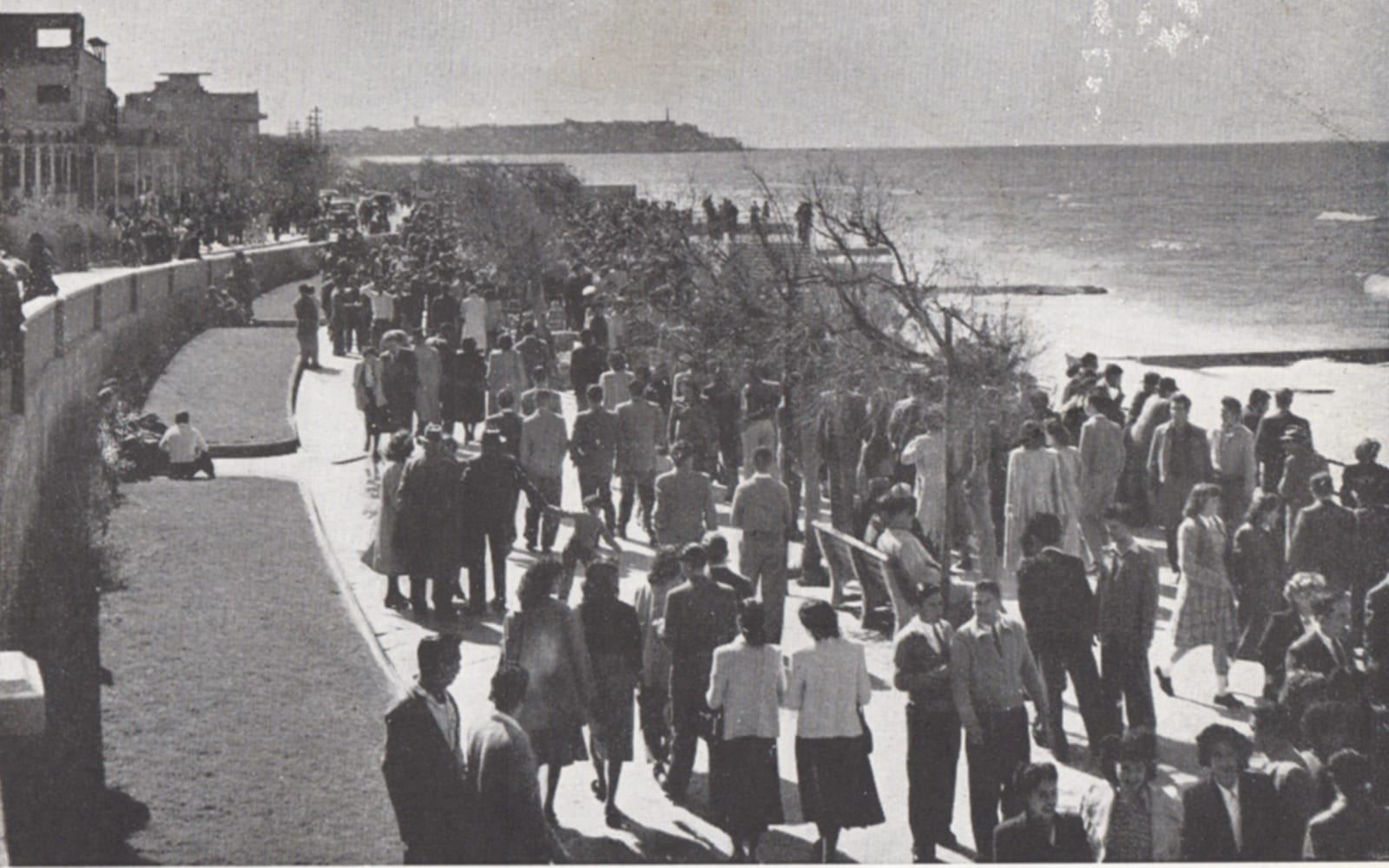
The beach is open. Sea temperature reaches 20–22°C by late April — brave swimmers are in the water by early April; most locals start beach-going properly from late April. The promenade (tayelet) between Jaffa Port and the Tel Aviv Port is as good a walk as the city offers: warm sun, sea light, and the long views north and south.
Gordon, Hilton, and Frishman beaches all have full facilities from April: sunbeds, kiosks, and the full beach-volleyball scene begins. The Tel Aviv beach guide covers the full promenade with practical access notes.
Carmel Market and Sarona Market are at their most colourful in April: spring produce at its peak, the farmers’ market section of Sarona drawing weekend crowds, and the Old Sarona complex’s courtyard restaurants all in full swing.
Passover in Tel Aviv is more relaxed than Jerusalem: the atmosphere is festive without the religious intensity, restaurants adapt their menus gracefully, and the White City’s Bauhaus streets and Neve Tzedek’s boutiques run normally. See the Tel Aviv guide for a full city orientation.
Planning April: the essentials
The booking timeline is the most important planning factor for April. Passover and Easter weeks require:
- Hotels: 4–6 months ahead for Jerusalem; 2–3 months for Tel Aviv and the Galilee
- Hotel Seder dinners: 3–4 months ahead at major Jerusalem hotels
- Passover/Easter tours: 2–3 months ahead for popular small-group itineraries
For budget-conscious April travel: The Dead Sea and Eilat see less Passover price pressure than Jerusalem. A base at Ein Bokek (Dead Sea) with day trips to Jerusalem keeps accommodation costs more manageable while still giving access to the holiday atmosphere.
Around the holidays:
Cross-links
The April season connects the following guides on this site:
- Passover in Israel guide — full logistics for the Seder, chametz, and holiday closures
- Easter in Jerusalem guide — Via Dolorosa, Holy Sepulchre, Garden Tomb, and Orthodox Easter
- Israel in March — Purim, wildflowers, and pre-crowd hiking in the quieter month before April
- Israel in spring guide — the full March–May seasonal overview
- Israel spring wildflowers guide — Darom Adom, Galilee orchids, bloom tracking
- Best time to visit Israel — month-by-month comparison
- First-time in Israel guide — practical orientation for first visits, including April planning tips