Solo travel in Israel is rewarding and logistically manageable. The country is compact enough to reach most major destinations from two or three base cities; English is widely spoken in the tourist economy; and the hostel and group-tour infrastructure — anchored by Abraham Hostels and a robust GetYourGuide and Viator ecosystem — is well developed for solo visitors. The main practical considerations are Shabbat transport logistics, solo accommodation costs, and the need to stay current with the regional security situation through your own government’s travel advisory.
Why Israel works well for solo travellers
Israel’s geography is one of its strongest advantages for solo travel. At 470 kilometres from north to south and rarely more than 100 kilometres wide, the country is smaller than Switzerland. Most major destinations are within two hours of each other by train or sherut. That compactness means a solo traveller can base themselves in two cities — Tel Aviv and Jerusalem are the natural anchor pair — and cover the country comfortably in 10–14 days without excessive logistics.
The social infrastructure has also evolved specifically around solo travellers. Abraham Hostels run by the Abraham Tours company operate in four cities and function as social hubs: free walking tours, daily group day trips, rooftop gatherings and a deliberately mixed atmosphere of independent travellers, birthright alumni and international volunteers. Even solo travellers who prefer private rooms often choose Abraham properties for the social common areas.
The best base cities for solo travellers
Tel Aviv is the most social entry point. The hostel scene here is the most developed in the country, the city layout is flat and walkable, and the beach and nightlife create natural social settings. Florentin (south of the city) has the densest concentration of budget accommodation and a neighbourhood character reminiscent of East London or Kreuzberg Berlin — grungy, creative, easy. The Old North and Rothschild Boulevard area suits travellers who want a more design-conscious environment within easy reach of the sea. Tel Aviv is also the most secular city in Israel — Shabbat has much less impact here than in Jerusalem.
Jerusalem is a more intense, solitary experience. The Old City is overwhelming in the best possible sense; navigating its four quarters alone, arriving at the Western Wall in the early morning before the crowds, or sitting in a corner of the Church of the Holy Sepulchre — these are experiences that solo travel actually enhances, removing the social obligation to narrate or explain. The Abraham Hostel Jerusalem on Jaffa Road is the strongest social option in the city; it runs the same group tour model as the Tel Aviv property and draws a comparable mix of visitors. Expect higher accommodation costs than Tel Aviv, longer walking distances, and a heavier Shabbat shutdown on Saturdays.
Haifa suits solo travellers who want a quieter, more local experience. The Bahá’í Gardens, the German Colony, and Wadi Nisnas are all within easy reach; the city is genuinely diverse (Jewish, Arab, Druze) in a way that Tel Aviv and Jerusalem are not; and prices are lower. There is no party scene and the hostel infrastructure is thinner than Tel Aviv, but as a base for northern day trips (Akko, Rosh Hanikra, Nazareth) Haifa works well.
Eilat at the southern tip suits solo travellers whose main interest is the Red Sea — diving, snorkelling and water sports. The resort economy is open on Shabbat, the climate is warm year-round, and single-room hotel rates are often more competitive than the rest of Israel. The drawback is relative cultural thinness compared to the north; most solo travellers use Eilat as a segment of a longer itinerary rather than a standalone destination.
Getting around solo
Israel’s rail network is the backbone. The main line runs from Nahariya in the north through Haifa, Tel Aviv and south to Beer Sheva, with a high-speed spur connecting Ben Gurion Airport to Tel Aviv in 17 minutes and Jerusalem in around 35 minutes. Trains are modern, air-conditioned, safe at all hours and have English signage throughout. For solo travellers, the rail network removes almost all the anxiety of moving between cities.
Sheruts (shared taxis) fill the gap when rail doesn’t reach or on Shabbat when trains stop. The Tel Aviv–Jerusalem sherut runs from Arlozorov terminal in Tel Aviv to Ben Yehuda Street in central Jerusalem; it departs when full (15 minutes maximum wait in practice) and costs marginally more than the train. Sheruts operate on Shabbat, which makes them the key solo traveller tool for Friday-to-Saturday movement.
For the Galilee, Golan Heights, Ramon Crater and other sites away from the main rail spine, a rental car is the most practical option. Road signs are trilingual and Google Maps works reliably throughout Israel proper. Waze is the preferred navigation app among Israeli drivers for real-time traffic. Car hire from Ben Gurion Airport or Tel Aviv is straightforward; see the driving in Israel guide for licence requirements and practical tips.
Accommodation for solo travellers
Hostels remain the best value-and-social combination for most solo travellers visiting Israel. Abraham Hostels (Jerusalem on Jaffa Road, Tel Aviv on Levontin Street, Haifa on Ha’Atzmaut Street, Eilat on HaTmarim Boulevard) offer dorm beds and private rooms with a social atmosphere and daily activity programme. Florentine Hostel in Tel Aviv’s Florentin neighbourhood is popular among younger independent travellers for its neighbourhood-embedded character.
Solo travellers on a slightly higher budget often find that boutique guesthouses and small hotels offer better value than standard hotels once the single supplement is applied. Filter Booking.com by “great for solo travellers” or by guest rating above 8.5 and central location — the results align well with what the solo travel community actually recommends.
Zimmer-style rural accommodation (Israeli B&Bs, usually a cottage on a family farm) is worth considering for a night or two in the Galilee, Golan or Negev. Prices per unit can work against solo travellers; look for rooms priced per person rather than per unit, or accept the premium for the experience.
Meeting people and social dynamics
Group day tours are the most reliable social mechanism in Israel. A Masada and Dead Sea tour from Tel Aviv or Jerusalem will assemble 8–25 solo travellers from a common hostel booking platform — by the afternoon swimming session in the Dead Sea, introductions have generally happened naturally. GetYourGuide and Viator both run well-reviewed small-group departures on the major routes.
Free walking tours create another social layer. Tel Aviv has multiple daily walking tours of the White City and Jaffa; Jerusalem has the Sandeman’s-model free Old City tour. Both reliably mix solo travellers.
The Israeli social culture itself is helpful. Israelis are famously direct and informal — strangers in cafés, hostel common areas and markets frequently initiate conversation. Solo travellers who make themselves visible in public spaces (café with a book, hostel common room rather than the private room) tend to have social days despite travelling alone.
Shabbat as a solo traveller
Shabbat (Friday sunset to Saturday night) deserves specific planning attention. For solo travellers this means:
Transport: Book any long-distance journey for before Friday afternoon (trains and buses stop at sunset) or after Saturday night. Eilat to Tel Aviv on a Friday evening is not possible by train. Sheruts bridge the gap on the main routes but run at reduced frequency.
Food and shopping: In Jerusalem and religious neighbourhoods throughout Israel, most restaurants and shops close for the full 25-hour period. In Tel Aviv, the secular city largely stays open. Plan ahead: buy food at a supermarket on Friday morning, or choose accommodation in a neighbourhood with Arab-owned shops (open on Shabbat).
The upside: Saturday mornings at the Western Wall, the Israel Museum, national parks (open on Shabbat) and beach are genuinely less crowded than weekday equivalents — and the atmosphere in religious neighbourhoods on Friday evening, as Shabbat candles are lit and families walk to synagogue, is one of the most distinctive experiences Israel offers. Solo travel sharpens the observation of these moments.
Safety and practical notes
Israel’s physical safety for tourists in the main cities is high. The security threat that exists — from geopolitical context, not interpersonal crime — is addressed in detail in the is Israel safe guide. The short version: always check your own government’s current travel advisory, not traveller forums, for the authoritative and up-to-date assessment.
Practical points for solo travellers:
- Israeli SIM cards and eSIM top-ups are available at Ben Gurion Airport arrivals and supermarkets; a local number makes transport apps, restaurant booking and navigation substantially easier. See the Israel eSIM guide for options.
- The ETA-IL (Electronic Travel Authorisation) has been required for most nationalities since January 2025. Apply online at least 72 hours before arrival. See visa information.
- Israel uses Type H (three-pin, unique to Israel) and Type C (round-pin European) sockets. A universal adapter or specific Type H adapter is necessary.
- Cash remains useful for markets, small stalls and some buses; ATMs accept international cards widely. The shekel (₪) is the currency. See the Israel money guide.
- Medical facilities in Tel Aviv and Jerusalem are excellent; travel insurance with medical coverage is advisable, particularly for the Dead Sea (cuts and salt exposure) and adventure activities. See Israel travel insurance.
Suggested solo itinerary: 7 days
Days 1–2: Tel Aviv — Arrive, recover from jet lag on the beach, walk Florentin and Rothschild Boulevard, explore Jaffa at sunset. Join the free White City walking tour on Day 2 morning; browse Carmel Market in the afternoon.
Day 3: Masada and Dead Sea — Join a group day tour from Tel Aviv or travel independently by bus and sherut to Arad. Sunrise Masada cable car ascent, Ein Gedi hike, Dead Sea afternoon float. Return to Jerusalem or Tel Aviv.
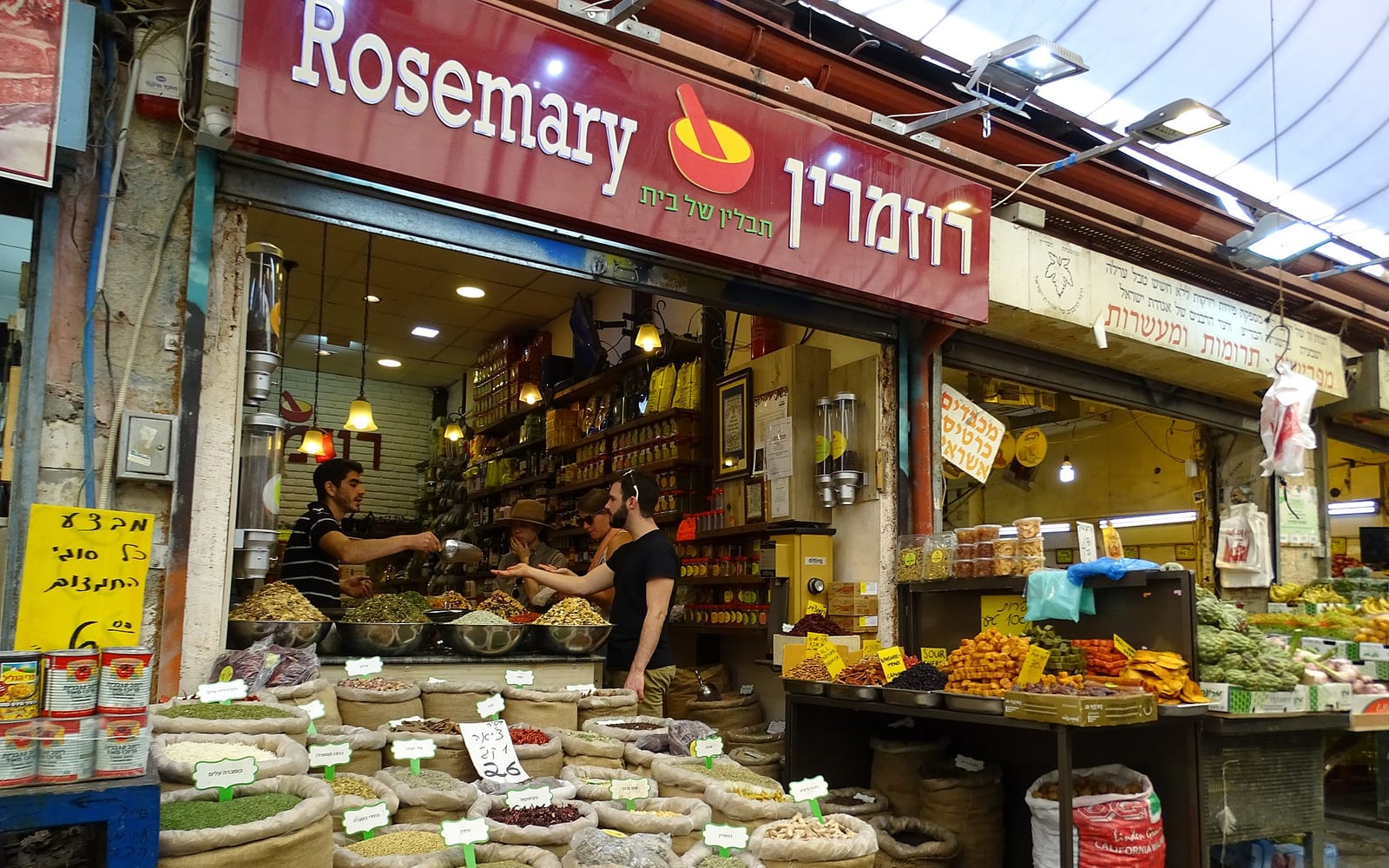
Days 4–5: Jerusalem — Old City walking: Western Wall tunnel tour (advance booking), Church of the Holy Sepulchre, Via Dolorosa, Muslim Quarter. Day 5: Israel Museum and Yad Vashem. Evening: Machane Yehuda market transforms from a food market into a bar street after 8pm — one of Israel’s best solo social settings.
Day 6: North — Caesarea, Akko or Haifa — Take the train north. Caesarea Roman ruins are a half-day; Akko Crusader city is a full day; Haifa (Bahá’í Gardens + Wadi Nisnas) is a relaxed alternative. Return to Tel Aviv for a final evening.
Day 7: Jaffa and departure — Morning in Old Jaffa (flea market, galleries, harbour), then Ben Gurion Airport (allow 3.5 hours before departure; security lines are longer than in most countries).
Cross-links to plan your trip: transportation in Israel, Israel cost and budget guide, best time to visit Israel, solo female travel in Israel, Israel backpacking guide.