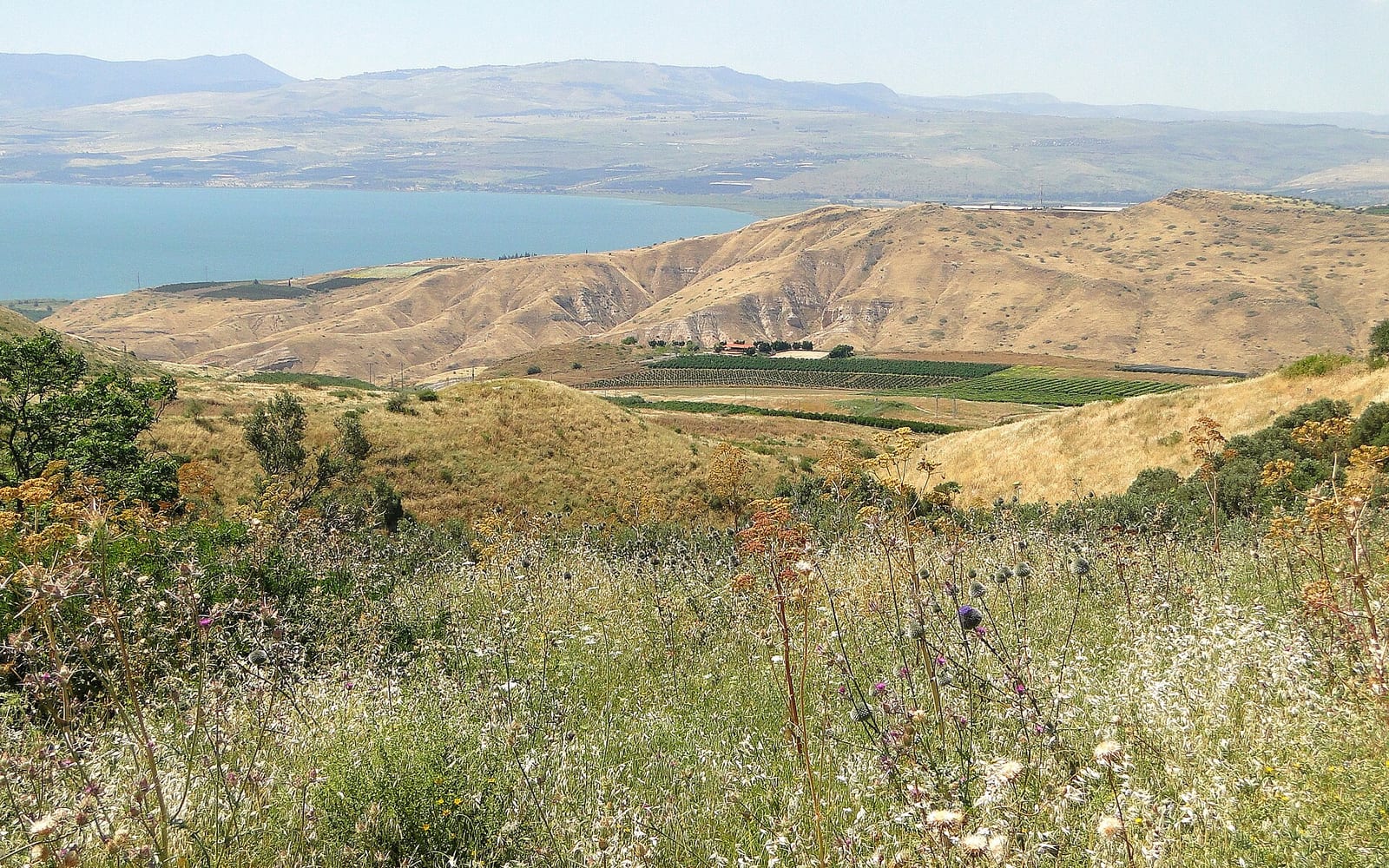
Israel is best known for desert canyons and beach culture, but in the Galilee hills there are two via ferrata routes — fixed-iron-rung cliff climbs — that deliver genuine mountain exposure with no technical skills required. This guide covers both, compares them, and explains how to book.
What is via ferrata?
A via ferrata is a mountain route equipped with fixed iron rungs, cables and ladders that allow you to ascend cliff faces that would otherwise require technical rock-climbing skills. You clip into a continuous safety cable using a harness and a dedicated lanyard; one arm is always attached as you move between anchor points. The technique is taught on-site in minutes.
Israel has two established via ferrata routes, both in the Galilee — the green, hilly northern region that most visitors pair with the Sea of Galilee and the Golan Heights. Neither requires prior climbing experience, and both supply all equipment.
Route 1 — Ramim Cliff (King’s Road Via Ferrata), Kibbutz Menara
Operator: Ashdot Extreme (ashdotextreme.co.il)
Location: Kibbutz Menara, Upper Galilee — the ridge above the Hula Valley, roughly 25 km northeast of Rosh Pina
Level: B/C (the easier of Israel’s two via ferratas; operator grading, not UIAA scale)
Distance/time: 1.2 km loop; 2–3 hours including zip-line descent
Minimum age: 12
What’s included: harness, helmet, gloves, instructor, zip line
The experience
Ramim Cliff is Israel’s original via ferrata, established in 2017. The route traverses the Ramim Ridge above the Hula Valley — a broad, flat agricultural valley that is also one of the world’s top birdwatching sites, particularly during crane migration season (November–February). As you ascend the cliff on iron rungs and cables, the views open north towards the hills above the Lebanese border and east over the Hula Lake Nature Reserve.
The route involves a mix of iron ladder sections, horizontal traverses on cable, and short vertical ascents. The hardest section is a near-vertical iron-rung face of roughly 15 m — the instructor guides you through foot placement and hand positioning before you reach it. The route finishes with a zip line descent back into the valley, which Ashdot Extreme runs as part of the package.
Best combined with: A day that pairs Ramim Cliff with Rosh Hanikra sea caves (40 km west) or the Banias Nature Reserve (30 km northeast).
Route 2 — Via Ferrata Ravid, Kibbutz Ravid
Operator: Israel Extreme / Adventure Israel (adventure-israel.com)
Location: Kibbutz Ravid, Lower Galilee — above the Sea of Galilee (Kinneret), roughly 10 km west of Tiberias
Level: C (more technical than Ramim; operator grading, not UIAA scale)
Distance/time: ~900 m linear route; 3–4 hours
Minimum age: 14
What’s included: harness, helmet, gloves, instructor, multiple zip lines, suspension bridges
The experience
Via Ferrata Ravid is Israel’s longest via ferrata and the more technically demanding of the two. The route climbs the limestone cliffs of Har Ravid — a ridge that drops dramatically towards the western shore of the Sea of Galilee. The views from the upper sections are exceptional: the entire Kinneret spreads below, with Tiberias along the western shore, the Golan Heights plateau beyond the eastern bank and, on clear days, Mount Hermon to the north.
The route includes multiple suspension bridges and several zip line sections threaded between cliff traverses. The Level C designation reflects longer runout sections between anchor points and a few genuinely airy moments on narrow ledges above the drop. It remains manageable for fit beginners but requires more confidence at height than Ramim Cliff.
Best combined with: A morning at Via Ferrata Ravid pairs naturally with an afternoon on the Sea of Galilee — boat tours depart from Tiberias and Ginosar — or with a visit to the Sea of Galilee beaches and Capernaum.
Comparison at a glance
| Ramim Cliff (Menara) | Via Ferrata Ravid |
|---|
| Region | Upper Galilee | Lower Galilee |
| Level | B/C | C |
| Duration | 2–3 hrs | 3–4 hrs |
| Min. age | 12 | 14 |
| Signature view | Hula Valley + Lebanon hills | Sea of Galilee + Golan Heights |
| Extras | Zip line descent | Suspension bridges + multi zip |
| Operator | Ashdot Extreme | Israel Extreme / Adventure Israel |
| Best for | First via ferrata; families | More exposure; longer day out |
Both charge a per-person fee that covers all equipment and the guide; verify current prices directly with the operator before booking — rates are not reproduced here as they are updated seasonally.
How to get there
Kibbutz Menara is reached via Route 90 (Jordan Valley road) north from Kiryat Shmona, then a short ascent to the ridge. By car from Tiberias: approximately 1 hour 20 minutes. From Haifa: approximately 1 hour 45 minutes. There is no public transport to the kibbutz; a hire car is required.
Kibbutz Ravid sits above Route 77 west of Kinneret, roughly 10 km west of Tiberias. By car from Tiberias: approximately 15–20 minutes. From Haifa: approximately 45 minutes. The road to the kibbutz is narrow but paved; no public transport.
What to bring
The operator provides all technical gear. Bring:
- Closed-toe shoes with grip — trail runners or light hiking boots; no sandals
- 2 litres of water minimum — the routes are fully exposed to sun in the upper sections
- Sunscreen, hat and sunglasses — essential in spring and autumn; mandatory in summer
- Small backpack or waist pack — keeps hands free on the rungs
- High-energy snack — routes typically take 2–4 hours with no refreshment points
- Phone or camera with a secure mount — loose-grip photography on a cliff is not recommended
Tips for booking
- Both routes are advance-booking only — no walk-up access.
- Weekend slots fill fastest in spring (March–May); book 2–3 weeks ahead for March and April dates.
- English-speaking instructors are available at both sites; confirm when booking if you need English.
- Routes may close after rain — wet iron rungs are slippery; call the operator the morning of your visit if recent rain is forecast.
- Group discounts are available at both operators for 8+ participants; confirm rates directly.
Combine with other adventure activities
Via ferrata pairs well with other Galilee outdoor activities:
- Water hiking (nahal) — the water-hiking guide covers the best cool-water canyon hikes in northern Israel, most within 30–60 minutes of the Galilee ridge.
- Cycling in the Galilee — the Sea of Galilee cycling loop (60 km, flat, shaded sections) is a natural day-two complement after Via Ferrata Ravid.
- Adventure sports overview — for the full picture of outdoor activities across Israel including canyoning, surfing and desert jeep tours, see the Israel adventure sports guide.
- Hiking — the hiking in Israel guide covers the Yam l’Yam (Sea to Sea), Jesus Trail and National Trail sections that pass through the same Galilee terrain.