Israel is one of the world’s most compelling travel destinations — ancient history, three major world religions, a vibrant modern culture, Mediterranean beaches, and a culinary scene that is earning international attention. For Chinese travelers, Israel also offers a unique intersection of two ancient civilizations with deep historical and cultural parallels. This guide covers everything you need to know to plan a smooth, rewarding trip.
The most important thing first: you need a visa
This is the single most critical piece of planning for Chinese passport holders. Israel’s ETA-IL electronic travel authorisation does not apply to Chinese citizens. The ETA-IL (similar to the US ESTA or Australian ETA) is only available to passport holders from a specific list of countries — China is not on that list.
Chinese citizens must apply for a B/2 Tourist Visa at an Israeli embassy or consulate before travelling. There is no visa-on-arrival option for Chinese passport holders.
Where to apply
Israeli diplomatic missions in China that accept tourist visa applications:
- Israeli Embassy in Beijing — primary application centre
- Israeli Consulate General in Shanghai — serves eastern China
- Israeli Consulate General in Guangzhou — serves southern China
- Israeli Consulate General in Chengdu — serves southwestern China
For application forms, current requirements, and appointment booking, go to the official Israeli embassy website for your jurisdiction. Requirements can change — check before applying.
What you will need
A standard B/2 tourist visa application typically requires:
- Valid passport with at least 6 months remaining validity after your planned return date
- Completed visa application form
- Recent passport photographs
- Confirmed return flight itinerary
- Confirmed hotel bookings — this is important; booking confirmation emails from Booking.com or your hotel are acceptable
- Bank statements demonstrating sufficient funds for your stay
- Travel insurance covering your entire trip duration
- Application fee (approximately USD 20–30; verify the current fee with the embassy)
Processing time is typically 10–15 business days. Apply at least one month before your planned departure — two months is safer during peak application periods (April–May and September–October).
The Jordan connection
If your itinerary includes crossing from Eilat into Jordan to visit Petra, note that Chinese citizens also require a visa for Jordan. The Jordan Pass (which bundles the Jordan visa fee with entry to Petra and 40+ Jordanian sites) is available online and is strongly recommended for any Jordan add-on. You can purchase the Jordan Pass before your trip; the Jordan visa component is included in the pass price for stays of at least 3 nights in Jordan.
Getting to Israel from China
Direct and connecting flight options
Air China operates the principal direct route: Beijing (PEK) to Tel Aviv Ben Gurion (TLV). Direct flight time is approximately 10–11 hours. Hainan Airlines has operated seasonal service on this corridor — check for availability during your travel period.
For travelers from Shanghai, Guangzhou, Chengdu, and other cities, connecting flights are the standard option:
- Cathay Pacific via Hong Kong (HKG) — frequent connections, well-suited to travelers from southern China
- Turkish Airlines via Istanbul (IST) — popular and often competitively priced; connects from multiple Chinese cities; total journey time from Beijing is typically 13–15 hours
- El Al via various European hubs
Book flights early, particularly for travel between April–May and September–October, which are peak tourism months in Israel.
Arriving at Ben Gurion Airport
Ben Gurion International Airport (TLV) is 20 km southeast of Tel Aviv. On arrival:
- Airport train (express rail link) — runs to Tel Aviv HaHagana station (then onward to Jerusalem) — the fastest, cheapest option
- Sherut (shared taxi) — fixed-price shared minibus to central Tel Aviv or Jerusalem; available 24 hours
- Private transfer — pre-bookable through your hotel or operators such as WelcomePickups
The immigration process at Ben Gurion can be thorough for first-time visitors. Be prepared to answer questions about the purpose of your visit, your accommodation, and your itinerary. This is normal. Have your hotel bookings, tour confirmations, and return flight details accessible on your phone.
Practical Israel: what Chinese travelers need to know
Money and payment
As covered in the FAQ above, WeChat Pay and Alipay are not accepted in Israel. Visa and Mastercard are the standard payment methods. Carry your bank card and some NIS cash. For more detail on ATMs, exchange rates, and the DCC trap, see our Israel money and ATM guide.
Internet and connectivity
Israel has no internet restrictions. Google Maps, WhatsApp, and all your usual apps work normally. For connectivity during your trip:
- Local SIM card — available at Ben Gurion Airport (Partner, Cellcom, Hot Mobile counters in the arrivals hall). Prepaid tourist SIMs give you data at Israeli rates, which are significantly cheaper than international roaming. Hot Mobile’s tourist SIM is a frequently cited option for value.
- eSIM — if your phone supports eSIM, you can activate an Israeli eSIM before you leave China. See our Israel eSIM guide for current options and pricing.
For navigation, Google Maps is reliable throughout Israel and includes public transport routing for the bus, train, and Tel Aviv Light Rail networks. Download the map offline before travel as a backup for areas with poor signal (desert areas, some tunnels).
Getting around Israel
Israel is a small country — approximately 470 km from north to south. Distances that look large on a map are manageable as day trips from a single base.
- Tel Aviv Light Rail — the Red Line opened in 2023 and connects central Tel Aviv with suburbs efficiently; uses Rav-Kav card (contactless card similar to a transit card)
- Inter-city trains — Israel Railways connects Tel Aviv, Jerusalem, Haifa, Beer Sheva, and Ben Gurion Airport; fast and comfortable; tickets bookable online
- Buses — Egged and Dan networks cover the whole country; slower than rail but cheaper and reach places trains don’t
- Sheruts — shared taxis that run fixed routes, slightly faster than buses; useful on some intercity routes
- Rental car — the most flexible option for exploring the Negev desert, Galilee, and the Golan Heights; see our car rental guide for details on driving in Israel
Language
Hebrew and Arabic are Israel’s official languages. English is very widely spoken in tourist areas, hotels, restaurants, and by most young Israelis — you will rarely struggle to communicate in English in Tel Aviv, Jerusalem, Haifa, or Eilat. Signs in major tourist areas, airports, and train stations are in Hebrew, Arabic, and English.
Mandarin is not widely spoken in Israel, so a phrasebook or translation app for basic interactions in smaller towns and markets can be helpful. Google Translate works well with Hebrew for signage.
Jewish–Chinese cultural parallels
Chinese and Jewish civilizations share remarkable parallels that make Israel a particularly resonant destination for many Chinese visitors: both are among the world’s oldest continuous civilizations; both place exceptional value on family cohesion, education, and scholarly achievement; both have diaspora communities scattered across the world while maintaining a strong sense of shared identity; and both civilizations had contact along the ancient Silk Road trade routes.
The Kaifeng Jewish community — a Jewish community that lived in Kaifeng, Henan Province, for over a thousand years — is a fascinating point of intersection between the two civilizations. The Kaifeng Jews arrived along Silk Road trade routes around the 8th–10th centuries and maintained a Jewish identity for nearly a millennium, ultimately assimilating into the broader Chinese Han population. A small number of descendants continue to research and document this heritage. The Israeli Museum in Jerusalem and the ANU Museum of the Jewish People in Tel Aviv both carry materials related to this history.
Food in Israel
Israeli cuisine is diverse, fresh, and largely accessible to Chinese palates — the emphasis on vegetables, fresh bread, grilled meats, rice, and legumes creates substantial common ground.
Kosher food explained
Israel has a significant proportion of kosher-observant restaurants and hotels. Kosher rules include:
- No pork in kosher establishments (non-kosher restaurants may serve pork)
- No mixing of meat and dairy — a restaurant serving meat will not offer cheese or cream sauces; a dairy restaurant will not serve meat
- Kosher certification — look for a teudah (certificate) displayed at restaurant entrances; most tourist-area restaurants have this on display
Many restaurants in Tel Aviv, Haifa, and tourist areas are non-kosher and will serve pork and mix meat and dairy freely. In Jerusalem, particularly in the religious neighborhoods and Old City, you will find predominantly kosher restaurants.
What to eat
- Hummus — a staple; fresh, warm hummus with olive oil is far superior to anything sold in a can
- Falafel — fried chickpea balls in pita with salad, tahini, and pickles; available on every street
- Shakshuka — eggs poached in spiced tomato sauce; popular for breakfast
- Sabich — fried eggplant, hard-boiled egg, amba sauce in pita; originally Iraqi-Jewish
- Knafeh — a Palestinian/Levantine cheese pastry soaked in sugar syrup; widely available in the Old City and Arab neighborhoods; best eaten warm
Chinese food in Israel
There is no Chinatown in Tel Aviv or Jerusalem in the way that other major cities have one, but Chinese and Pan-Asian restaurants operate in the Levinsky Market area in south Tel Aviv (sometimes called “Little Asia” for its Asian spice shops and restaurants) and in central Tel Aviv. These are generally non-kosher. Quality and authenticity vary — for many Chinese travelers, Israeli cuisine itself is the more rewarding culinary adventure.
For Muslim Chinese travelers, halal restaurants are available throughout Israel in Arab neighborhoods, including the Muslim Quarter of Jerusalem’s Old City, Wadi Nisnas in Haifa, and Arab-Israeli towns.
Group travel vs independent travel
Chinese travelers traditionally favor group tour packages, which offer Mandarin-speaking guides, pre-arranged logistics, and a sense of security in an unfamiliar destination. This is a very reasonable approach for Israel, where the complexity of navigating between religious sites, understanding security protocols, and finding non-tourist restaurants is non-trivial.
Israel small group tours through operators like GetYourGuide and Viator can be booked with English commentary, and some operators offer Mandarin-speaking guides on request. For guaranteed Mandarin-language commentary, a private guided tour is the most reliable option — book through Viator or GetYourGuide and specify Mandarin in the notes at booking.
For independent Chinese travelers comfortable with English, Israel is straightforward to navigate independently, and the public transport network covers all major tourist sites. See first-time visitors in Israel for a broader overview.
What to see: a suggested itinerary
Israel rewards at least 7–10 days. A classic itinerary for first-time visitors:
Days 1–3 — Tel Aviv
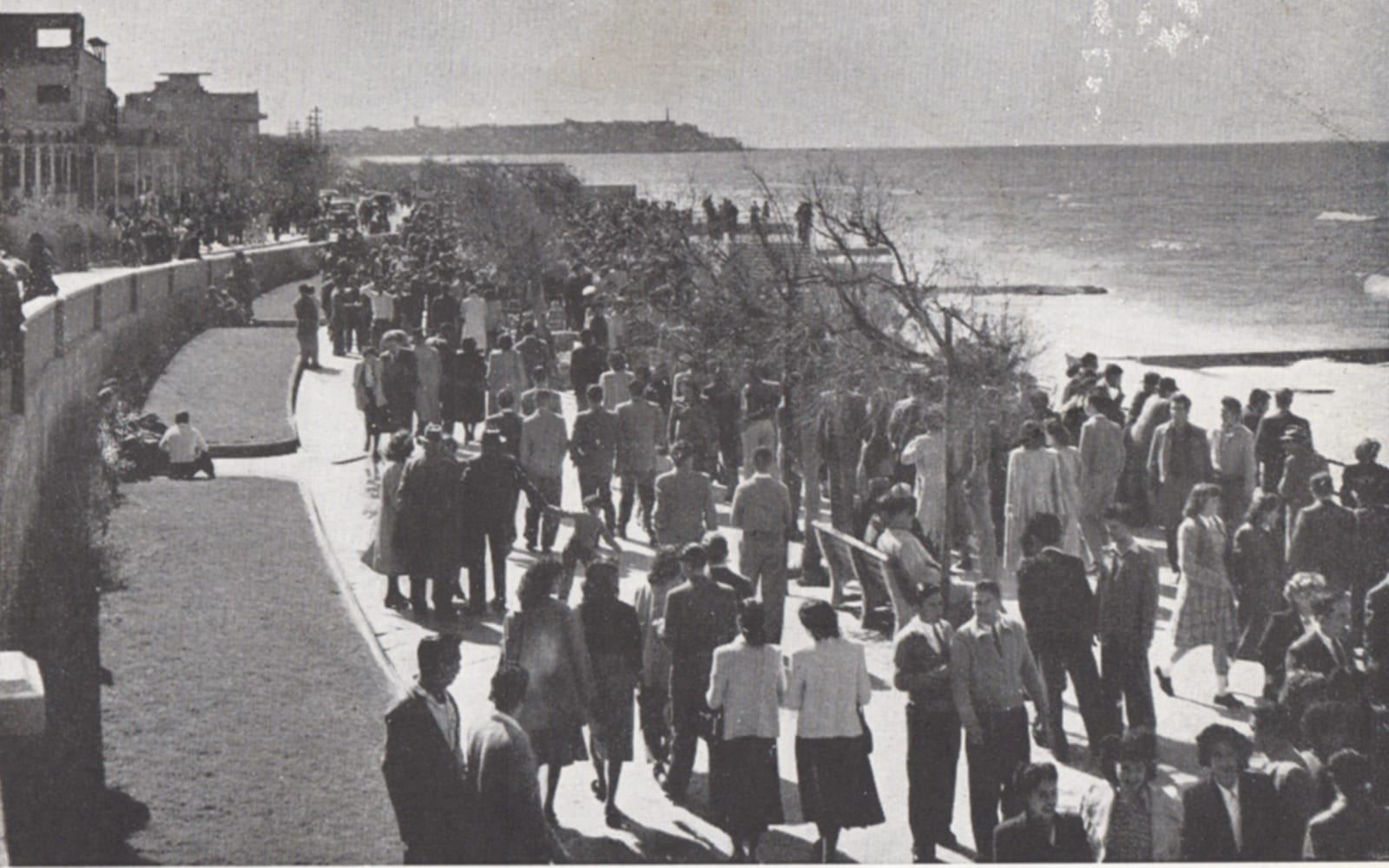
Arrive at Ben Gurion; settle into Tel Aviv. Explore Jaffa’s ancient port, the Carmel Market, the White City’s Bauhaus architecture, and the beaches. Tel Aviv is secular, cosmopolitan, and an excellent base.
Days 4–6 — Jerusalem
Day trips from Tel Aviv, or relocate to Jerusalem. The Old City covers the Jewish Quarter and Western Wall, the Via Dolorosa and Church of the Holy Sepulchre, and the Muslim Quarter’s Dome of the Rock compound. The Israel Museum (Dead Sea Scrolls at the Shrine of the Book), Yad Vashem Holocaust Memorial, and the Tower of David complete the essentials.
Days 7–8 — Dead Sea & Masada
A Masada and Dead Sea day trip from Jerusalem covers the most dramatic landscape in Israel: Masada fortress at sunrise, then floating in the Dead Sea. Dead Sea mineral mud facials are a popular experience.
Days 9–10 — Galilee & Nazareth
Nazareth, the Sea of Galilee, and the Golan Heights offer a completely different Israel — agricultural, historical, and comparatively uncrowded.
Safety and security
The security situation in Israel is a common concern for prospective visitors. The Israeli government and Ministry of Tourism maintain an active presence to support tourism, and millions of international visitors travel safely each year.
The Chinese government’s Ministry of Foreign Affairs issues travel advisories for Israel. We recommend reading both Chinese MFA advisories and the Israeli Ministry of Tourism’s current information before booking. The conflict zones that generate advisories are geographically specific — the Gaza border area and northern border — and the major tourist sites (Tel Aviv, Jerusalem, Dead Sea, Galilee, Eilat) are far from these areas in normal circumstances. That said, the security situation can change, and travel insurance covering cancellation and medical evacuation is essential.
See our Israel safety guide and our Israel travel insurance guide for more detail.
Useful resources for Chinese travelers
- Israeli Embassy in China (check the official website for your jurisdiction for current visa requirements)
- Ben Gurion Airport official website — flight arrivals and departures, transport links
- Israel Railways (rail.co.il) — intercity train timetables and online booking
- Israel Ministry of Tourism (tourism.gov.il) — official travel information
- Google Maps — works fully in Israel; download offline maps before arrival
For more on getting around, see our transportation guide and Rav-Kav card guide. For accommodation options across the country, see our Israel accommodation guide.