Israel is one of the few countries where paragliding is genuinely available year-round, thanks to a diverse geography that combines Mediterranean sea-breeze ridges, elevated Galilee plateaus, and Negev desert thermals — each with its own season and character. Whether you want a 20-minute tandem flight over the Mediterranean or a thermal soaring experience above the Ramon Crater, there is a site and a season that works.
This guide covers the three main launch areas, the operators running commercial tandem flights, and what you need to know before booking.
Why paraglide in Israel?
Israel’s combination of Mediterranean coastal ridges, elevated plateaus and desert thermal zones means that flying conditions exist somewhere in the country for most of the year. The coastline between Haifa and Tel Aviv generates reliable afternoon sea-breeze lift that makes the Carmel ridge one of the most consistent soaring sites in the Middle East. The Ramon Crater — a vast 40-km erosion crater in the Negev desert at 900 m altitude — creates powerful thermals in spring and autumn that allow extended soaring flights. The Galilee ridge offers elevated plateau flying with views across the Sea of Galilee and into Jordan on clear days.
Tandem paragliding is accessible to anyone in reasonable health — no prior experience, fitness training or equipment is required.
The three main launch areas
1. Mt. Carmel coastal ridge — near Atlit, south of Haifa
The ridge running south from Haifa along the Mt. Carmel coast is Israel’s most developed paragliding area and the home base of several commercial operators.
The flying: The ridge generates consistent sea-breeze lift on most afternoons from October through to June, and the view combines the Israeli Mediterranean coastline in one direction with the Carmel highlands in the other. Flights typically run 15–30 minutes depending on conditions. The launch sites sit at 150–400 m above sea level on the west-facing ridge slope; landings are on the coastal plain below.
Best season: October–June. The sea breeze is least reliable in peak summer (July–August), when offshore thermal conditions dominate and make conditions more variable. Autumn (October–November) and spring (March–May) are the most consistent windows.
Getting there: The Atlit area is approximately 30 km south of Haifa by car (Route 4). Operators typically arrange a meeting point in Haifa or Atlit and transport participants to the launch site by vehicle.
2. Galilee ridge sites — Upper Galilee and Golan Heights
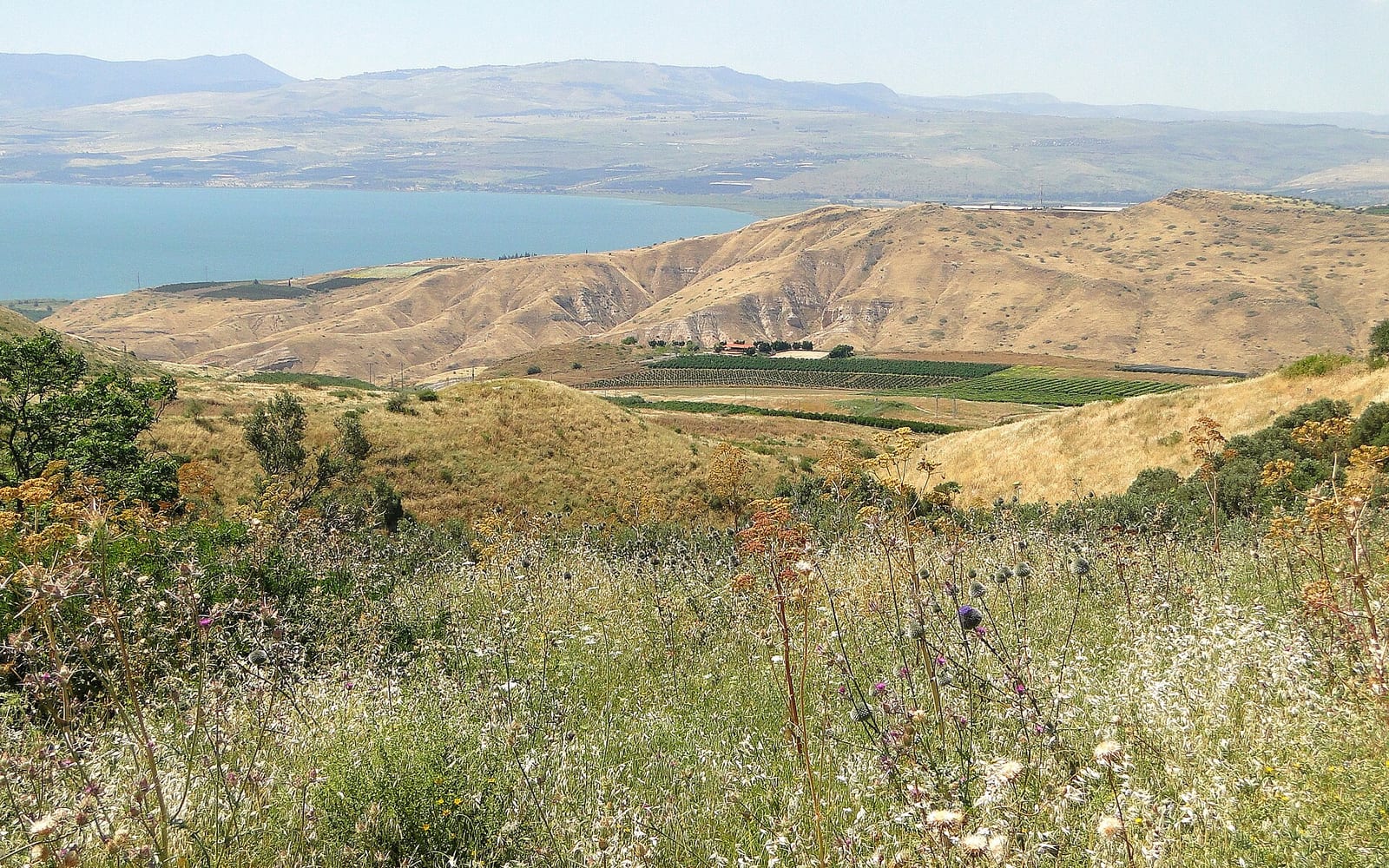
The elevated plateau terrain of the Upper Galilee and Golan Heights provides a second distinct flying environment, with panoramic views across the Kinneret (Sea of Galilee) basin, the Jordan River valley and — on clear days — Jordan and Syria in the distance.
The flying: Sites near Katzrin and along the Golan plateau edges fly on ridge and thermal lift. Flights here tend to be more thermal-dependent than the Carmel coast’s sea-breeze regime; conditions are typically best in mid-morning before convection builds. Views across the Kinneret are a highlight — the lake at 211 m below sea level, the surrounding mountains, and the distant Jordanian plateau make this one of the most visually impressive flying locations in the country.
Best season: Spring (March–May) and autumn (September–November). Summer thermals on the plateau can be strong but gusty; winter brings less reliable flying weather. Security note: the Golan Heights is administered by Israel and is safe for tourists in designated areas — operators know which sites are appropriate.
Getting there: Katzrin is the main town of the Golan Heights and is accessible by car from Tiberias (about 35 km) or via Route 91 from the north. A hire car is strongly recommended for the Galilee and Golan — public transport connections to launch sites are poor.
3. Ramon Crater (Makhtesh Ramon) — near Mitzpe Ramon, Negev
The Ramon Crater is a 40-km-long erosion crater at approximately 900 m altitude in the Negev Highlands — the largest of Israel’s five makhtesh (erosion crater) formations. Its combination of altitude, desert thermals and dramatic geology makes it a genuinely exceptional setting for paragliding.
The flying: Thermal activity in the crater and along the crater-edge ridges generates the lift for flights here. The views are unlike anything else in Israel: the crater floor exposing 200 million years of geological strata, the desert highlands, and — on clear days — the Gulf of Aqaba in the far south. Flights from the crater rim are typically 20–45 minutes; thermal days can extend significantly beyond this.
Best season: Spring (March–May) and autumn (September–November) for strongest, most reliable thermals. Summer thermals are powerful but can be gusty and turbulent in the afternoon heat — operators may fly only in the morning window. Winter days can be excellent but require checking weather carefully.
Getting there: Mitzpe Ramon is about 85 km south of Beer-Sheva on Route 40. The town has hotels, guesthouses and a visitors’ centre for the crater. A hire car is essential — there is no convenient public transport to Mitzpe Ramon for day trips. See the Mitzpe Ramon guide for full logistics and accommodation.
Commercial operators
Two established commercial operators run tandem paragliding flights in Israel:
Adventure Israel (adventure-israel.com) — Tel Aviv–based operation with flights offered from the Carmel coastal ridge and other sites. Tandem and instruction available.
Paragliding Israel (paragliding-israel.com) — Galilee specialist with launch sites in the Upper Galilee and Golan. Tandem flights and beginner instruction courses.
Both operators advertise their Israel Civil Aviation Authority (CAAI) registration — ask to confirm this when booking, as CAAI certification is a basic safety indicator for any commercial paragliding operation. GetYourGuide also lists tandem paragliding experiences in Israel (search “paragliding Israel”) from verified operators.
Booking advice: Paragliding is always weather-dependent. Reputable operators contact you on the morning of your flight to confirm conditions; flexible cancellation and rescheduling is standard practice. Confirm the operator’s policy before booking.
What to expect on the day
Before the flight: Your pilot will give a briefing covering the take-off run (3–5 steps forward at the pilot’s signal), body position during flight, and the landing approach. Listen carefully — the briefing takes 10–15 minutes and covers everything you need to do.
Take-off: On most sites, you and the tandem pilot run together down a short slope into the breeze. The glider lifts after a few steps. Most first-time flyers are surprised at how gentle and gradual the lift is — there is no sudden drop or jolt.
In the air: The pilot handles all controls. Your job is to enjoy the view. Most people are surprised at how quiet and calm paragliding is — the only sound is the wind. The altitude and perspective, with the landscape laid out below and no aircraft structure around you, is unlike any other aerial experience.
Landing: The pilot will guide you through a gentle run-out landing on a flat field or designated landing area. You will typically walk off the flight as though you had just jogged a few steps.
Video: Many operators offer GoPro footage of the flight — confirm availability and cost before take-off if you want a record of the experience.
| Detail | Notes |
|---|
| Weight limit | Most operators: 40–100 kg. Confirm with your specific operator before booking. |
| Minimum age | Typically 14–16 with parental consent for minors; adults fly without restriction. |
| Health considerations | Unsuitable for those with severe heart conditions, epilepsy, recent surgery, or pregnancy — discuss with operator in advance. |
| What to wear | Comfortable clothes, closed-toe shoes with ankle support. Bring a warm layer — altitude is cooler than ground level even in summer. |
| Photography | Bring a compact camera or use your phone in a secure grip — no loose camera straps or large camera bodies that could interfere with the harness. |
| Cancellation | Weather cancellations are common and are always initiated by the operator. A reputable operator will reschedule rather than fly in unsafe conditions. |
Combining paragliding with a wider itinerary
Carmel ridge flight + Haifa day: A morning paragliding session at Atlit pairs naturally with an afternoon in Haifa — the Bahá’í Gardens, the German Colony neighbourhood and the market at Wadi Nisnas are all within easy reach. See the Haifa travel guide for full Haifa logistics.
Ramon Crater flight + Mitzpe Ramon: A morning thermal flight above the crater combines with an afternoon at the Makhtesh Ramon Visitor Centre and a sunset walk along the crater rim. The town’s small-group jeep tours and rappelling operators also launch from the same area.
Galilee ridge + Golan day: A Galilee paragliding session can be combined with a Golan Heights circuit — Nimrod Fortress, Banias Nature Reserve, and a lunch stop at a Golan winery. A hire car is essential.