The Abraham Accords signed in September 2020 between Israel and the United Arab Emirates and Bahrain — followed by Morocco’s normalisation agreement in December 2020 — opened direct air connections and, more significantly, a path for Gulf citizens to experience Israel directly. Since then, Emirati, Bahraini and Moroccan visitors have arrived in Tel Aviv, Jerusalem, Nazareth and Eilat in growing numbers, drawn by the Red Sea diving, the shared Abrahamic heritage, the Old City of Jerusalem, and a curiosity about a country that was once entirely off the itinerary.
Israel has a large Arabic-speaking population, active mosques in every major city, a rich tradition of Arab-Israeli cuisine, and easy access to the Temple Mount / Haram al-Sharif — Islam’s third holiest site. This guide covers the specific practical questions Gulf travelers face before they fly.
ETA-IL: required pre-travel approval
UAE, Bahrain and Morocco passport holders can visit Israel for stays of up to 90 days without a traditional visa. Since January 2025, however, all visa-exempt travelers must obtain an approved ETA-IL (Electronic Travel Authorisation for Israel) before departure — this applies to Gulf nationals alongside European and North American visitors.
Apply at eta.gov.il:
- Cost: approximately ₪25 per application (paid online by card)
- Processing: typically minutes to a few hours
- Validity: two years / multiple entries, tied to the specific passport used
- Airline check: airlines verify ETA-IL approval at check-in — apply before you leave for the airport
Practical note: Israeli border procedures include a short security interview at the airport and potentially at the border crossing. Carry printed hotel confirmations, a return flight booking, and any relevant business correspondence if applicable. This is standard procedure for all visitors; Gulf nationals with Abraham Accords passports report it is generally smooth at Ben Gurion Airport.
See the complete ETA-IL application guide for step-by-step instructions.
Flights from the Gulf
Several airlines now connect the Gulf directly to Tel Aviv Ben Gurion Airport (TLV):
| Route | Main carriers | Approx. flight time |
|---|
| Dubai (DXB/DWC) → Tel Aviv (TLV) | El Al, FlyDubai, Air Arabia | ~3h 15m |
| Abu Dhabi (AUH) → Tel Aviv | Etihad, El Al | ~3h 30m |
| Casablanca (CMN) → Tel Aviv | Royal Air Maroc, El Al | ~4h |
| Doha (DOH) → Tel Aviv | Check current status | ~3h |
Etihad frequency note: As of June 2026, Etihad operates up to 6 daily flights between Abu Dhabi (AUH) and Tel Aviv (TLV) — around 42 weekly departures, making it one of Etihad’s most-served routes globally. UAE-based travelers have departure options throughout the day; check etihad.com for current timetables and book in advance around Israeli holidays (see the Jewish holiday calendar) when demand peaks.
Schedules and frequencies change — verify with your airline or travel agent before booking. Ben Gurion Airport is Israel’s main international gateway, 20 km east of Tel Aviv with a fast train link to the city centre.
Language and communication
Arabic is an official language of Israel. Around 20% of the Israeli population are Arab citizens — predominantly Muslim, with Christian and Druze communities. In practical terms:
- Road signs are in Hebrew, Arabic and English throughout Israel
- Muslim Quarter, Nazareth, Akko, Jaffa: primarily Arabic-speaking commercial environments; no difficulty communicating
- Taxi drivers: many, especially in Jerusalem, are Arab-Israeli and speak Arabic
- Hotel staff: international hotels in Tel Aviv and Jerusalem frequently have Arabic-speaking personnel
- Tel Aviv city centre: English is more widely used in the commercial core, though Arab hospitality businesses operate throughout the city
You will not struggle to communicate as an Arabic speaker in Israel’s major tourist areas.
Al-Aqsa / Haram al-Sharif: visiting Islam’s third holiest site
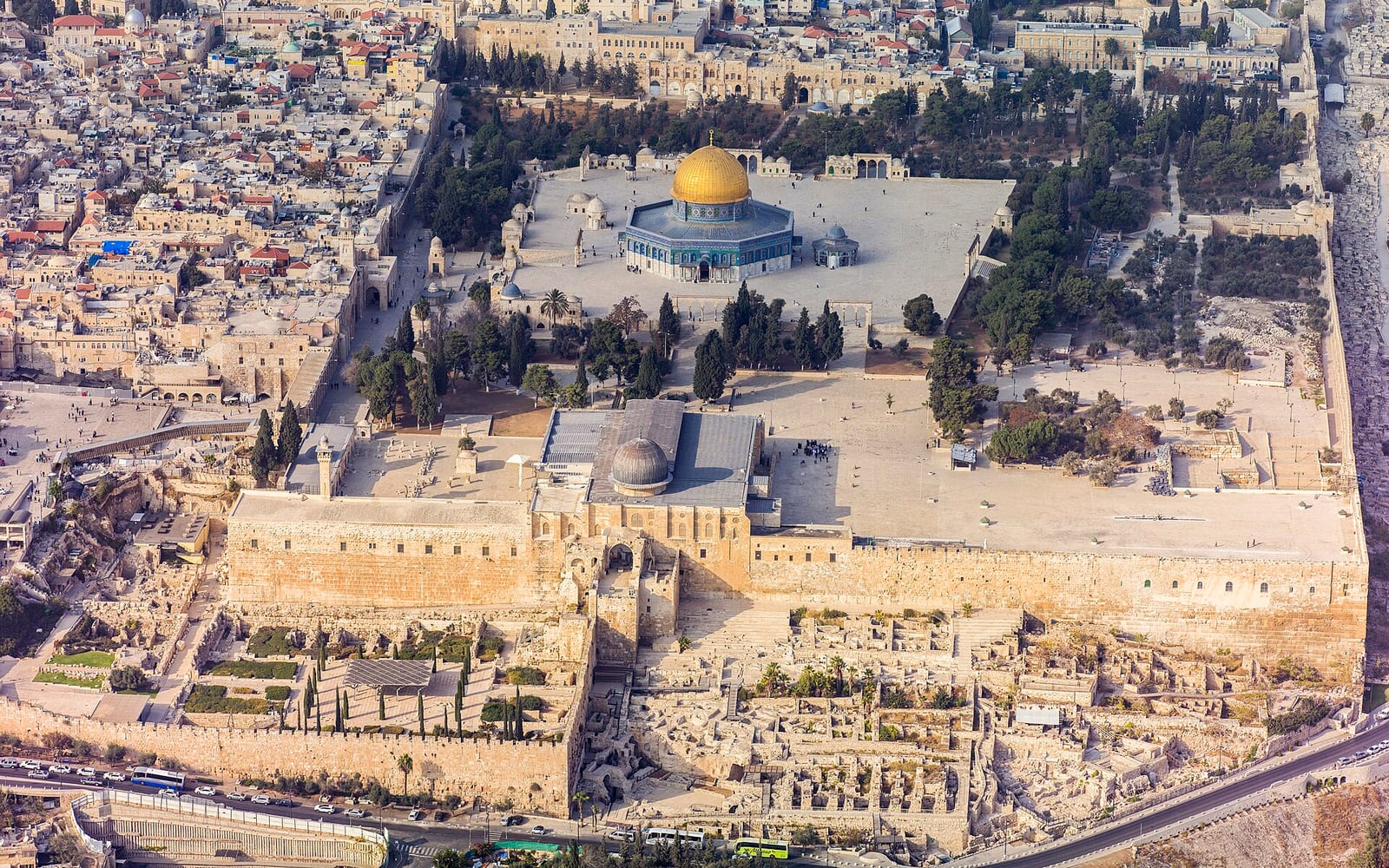
The Temple Mount / Haram al-Sharif compound in the Old City of Jerusalem is one of the most significant destinations in the world for Muslim visitors. The compound contains the Al-Aqsa Mosque (the grey-domed mosque), the Dome of the Rock (the gold-domed shrine over the Foundation Stone), and the surrounding esplanade — one of Islam’s most revered spaces.
For Muslim visitors: you may enter the compound through multiple gates for prayer during open hours. The Al-Aqsa Mosque and Dome of the Rock interiors are accessible to Muslim worshippers.
For non-Muslim visitors: limited access to the compound plaza only, via the Mughrabi Gate (adjacent to the Western Wall plaza), during restricted visitor hours — typically Sunday through Thursday, approximately 07:30–11:00 and 13:30–14:30. Interiors of the mosque and Dome of the Rock are not accessible to non-Muslims. Access hours and availability change frequently with prayer schedules, religious calendar dates and security conditions.
How to get there: from Jaffa Gate, walk through the Old City toward the Western Wall plaza; the Mughrabi Gate ramp ascends from the southern end of the plaza. From Lion’s Gate (the main Muslim Quarter entrance), walk down Al-Wad Street into the Muslim Quarter — about a 10-minute walk to the compound’s northern gates.
Important honesty note: access to the compound can be restricted or suspended without notice by the Islamic Waqf (the administering authority), by Israeli security decisions, or during high-attendance Muslim religious events such as Ramadan’s final days or Eid al-Adha. Always verify current access arrangements before visiting — check with your hotel, with the Waqf, or with your tour guide.
Halal food in Israel
Israel does not have a nationally unified halal-certification body comparable to the Gulf standards, but reliable halal food is widely available in Arab-Israeli areas. The best approach:
Most reliable halal areas:
- Jerusalem Old City — Muslim Quarter: maqluba, mansaf, knafeh, falafel, shawarma, mezze. The souks near Damascus Gate and Al-Wad Street are lined with Arab-Muslim-owned eateries that operate by community halal standards
- Nazareth: Israel’s largest Arab city and gastronomic highlight — freekeh, maklouba, Arabic sweets, outstanding hummus; restaurants are almost entirely Arab-Muslim or Arab-Christian owned
- Akko (Acre) Old City: fish restaurants and market food around the Khan al-Umdan and Al-Jazzar Mosque vicinity
- Jaffa (Yafo): Arabic cafes and restaurants in the Old Jaffa Arab quarter south of the port
- Wadi Nisnas, Haifa: Arab cultural neighborhood with bakeries, coffee houses and restaurants
- Beer Sheva: Bedouin market area and Arab-Israeli restaurants
Note on ‘kosher’ vs ‘halal’: kosher and halal share some principles (pork prohibition; specific animal slaughter requirements) but are not the same certification. A restaurant carrying a kosher certificate may serve food that does not meet halal standards in other respects. In mainstream Israeli (Jewish-Israeli) restaurants, always ask directly about halal status — do not assume kosher means halal. In Arab-Israeli restaurants, the community standard is halal practice even without formal certification; for formal certification, ask the restaurant directly.
International hotel chains in Tel Aviv (Sheraton, Marriott, Dan, David Kempinski) and Jerusalem (King David, Waldorf Astoria, Mamilla) can frequently arrange halal-certified options on request — confirm at booking.
Prayer facilities across Israel
Mosques operate in every major Israeli city:
- Jerusalem: Al-Aqsa Mosque (primary; compound access per Waqf schedule); Haram al-Sharif courtyard; numerous neighbourhood mosques in East Jerusalem
- Jaffa (Tel Aviv): Al-Bahr Mosque (a historic 19th-century Ottoman-era port mosque in the Jaffa seafront; open for prayer)
- Haifa: Al-Istiqlal Mosque (Independence Mosque; central)
- Akko: Al-Jazzar Mosque (18th-century; Ottoman; open to visitors outside prayer times — plan your visit accordingly)
- Nazareth: Al-Shihab Mosque and the White Mosque
- Beer Sheva: central mosque
Prayer times align with the standard Islamic timetable calculated from Mecca; apps such as Muslim Pro function normally in Israel with location services enabled. The qibla direction from Israel points approximately south-southwest toward Mecca.
Currency and payment
Israel uses the New Israeli Shekel (₪ / NIS). Current exchange rates: check your bank or XE.com before travel.
- ATMs: widely available at Ben Gurion Airport, all city centres, tourist sites
- Cards: Visa and Mastercard accepted almost universally; American Express at higher-end hotels and restaurants
- NFC pay: Apple Pay and Google Pay work at most Israeli terminals — a convenient option for Gulf travelers accustomed to contactless payments
- Cash: useful for markets (Carmel Market Tel Aviv, Machane Yehuda Jerusalem, Akko souks), small stalls and tips
UAE dirhams and Bahraini dinars are not accepted at Israeli merchants; exchange into USD or EUR if you prefer to avoid unfamiliar currencies, or withdraw NIS from airport ATMs on arrival.
Driving
Israel drives on the right (same as the UAE and Morocco). UAE and Bahrain driving licences are valid in Israel when accompanied by an International Driving Permit (IDP). Car rental at Ben Gurion Airport is available from all major international agencies. Road quality is high; tolls apply on Route 6 (the main north-south highway) — a rental car transponder is the simplest solution. GPS navigation works well; Waze is the dominant navigation app in Israel.
Power
Israel uses 230V / 50Hz with Type H sockets (three flat pins in a Y-shape, unique to Israel), though most modern Israeli sockets also accept Type C two-pin plugs. UAE appliances (220-240V) are voltage-compatible; you need only a plug adapter.
Connectivity
Israel has full 4G/5G coverage across all major cities. Israeli SIM cards are available at Ben Gurion arrivals or at convenience stores. The Israel eSIM guide covers international eSIM options for Gulf travelers who prefer not to swap SIMs.
What to do in Israel
Gulf travelers report the following as particular highlights:
Jerusalem — the spiritual core: the Old City contains the Al-Aqsa Mosque / Haram al-Sharif, the Dome of the Rock, the Western Wall, the Church of the Holy Sepulchre, the Via Dolorosa, and the ancient suqs that have served pilgrims of all three Abrahamic faiths for centuries. A minimum of two full days in Jerusalem is recommended.
Nazareth: Israel’s largest Arab city is a living Arabic cultural centre with extraordinary food and a warm welcome for Gulf visitors. The Basilica of the Annunciation and the Old City suqs are both worth a full morning. See the Nazareth travel guide for detail.
Akko (Acre): an Ottoman and Crusader coastal city with a stunning Arab old city, a large active Friday mosque, excellent seafood restaurants and easy day-trip access from Haifa. See the Akko travel guide for more.
Tel Aviv beaches and nightlife: Israel’s Mediterranean coastal city is a stark contrast to Jerusalem — secular, beach-focused, internationally diverse, with a restaurant scene that ranges from Arabic-Israeli fusion to fine dining. The Tel Aviv day itinerary covers the city’s main areas.
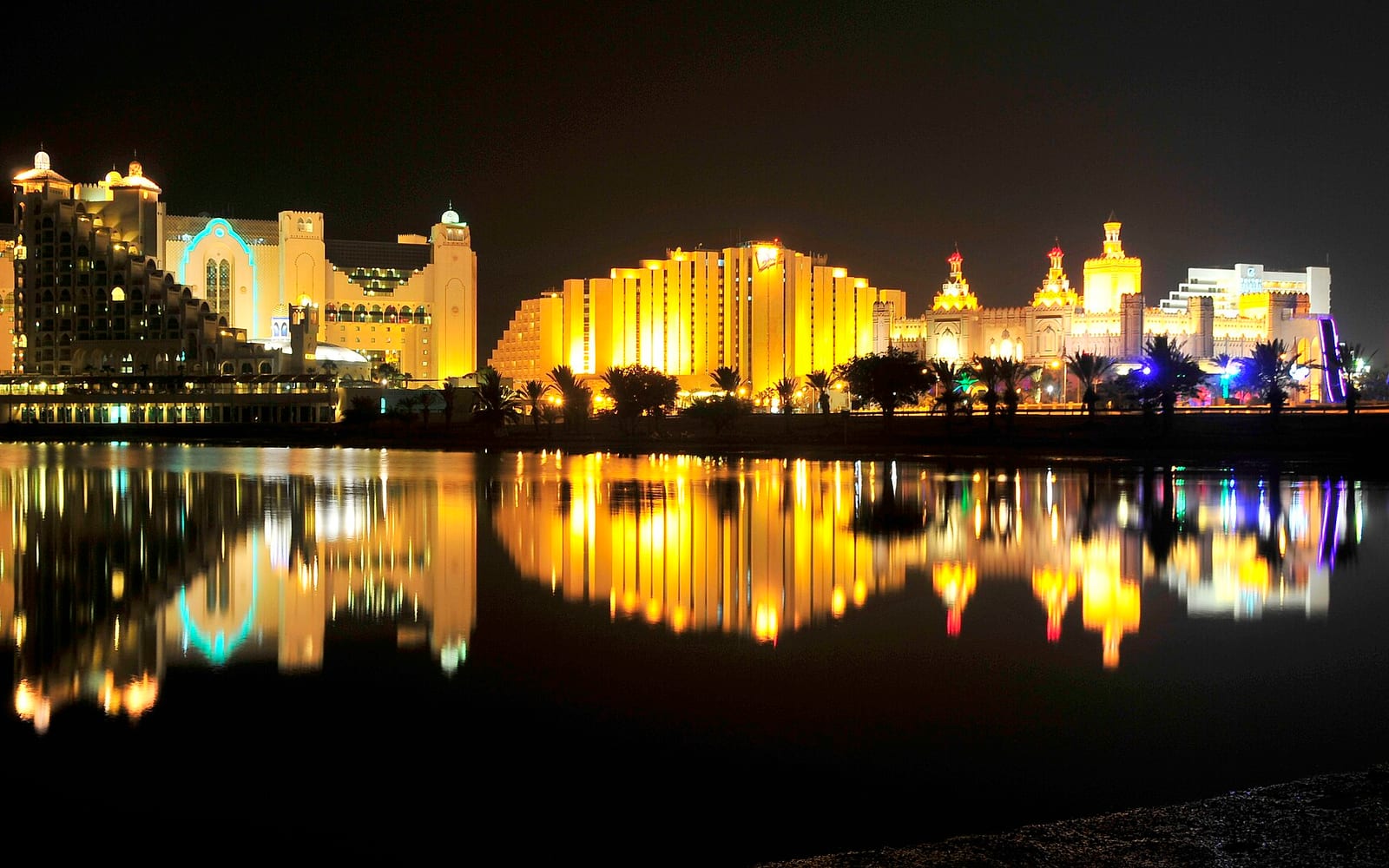
Eilat and the Red Sea: Eilat is Israel’s southernmost city on the Red Sea — the same body of water as Aqaba in Jordan and Taba in Egypt. The coral reefs at Eilat’s Coral Beach Nature Reserve are accessible by snorkel or scuba; PADI dive centres operate at the beach. Gulf visitors familiar with Red Sea diving report Israeli Red Sea sites as excellent. See the Eilat guide for accommodation and logistics.
The Galilee and Sea of Galilee: the northern region combines Christian pilgrimage sites (Capernaum, Tabgha, Nazareth) with Israeli nature reserves, Druze villages, and the shores of the freshwater Sea of Galilee — Lake Tiberias / Kinneret.
Dress code and cultural etiquette
Israel is a religiously and culturally diverse country. Practical guidance:
- At holy sites: covered shoulders and knees are required at Jewish, Christian and Muslim sites alike. Women entering mosques require a headscarf; inexpensive ones are available near site entrances. See the holy sites dress code guide for detail
- Friday prayers: the Muslim Quarter of Jerusalem sees heavy Friday attendance; if visiting Al-Aqsa / Haram al-Sharif compound, plan around the Jumu’ah congregation rather than trying to visit during it
- Shabbat: the Jewish Sabbath (Friday sunset to Saturday night) affects transport and commercial opening hours in Jewish-majority areas. Arab-Israeli areas operate normally on Shabbat. The Shabbat guide explains what’s open and closed
- Public drinking: alcohol is widely sold in Israel, including in tourist areas. Muslim visitors should note that non-Muslim staff at hotels and restaurants will not be offended by requesting non-alcoholic alternatives; halal dining establishments typically do not serve alcohol
Cross-border travel
From Israel, the following cross-border options are popular with Gulf travelers already in the region:
- Jordan (Wadi Araba border crossing, Eilat / Aqaba): day trips or overnight stays in Petra and Wadi Rum are straightforward from Eilat. See the Petra from Eilat guide and the Israel–Jordan itinerary for logistics
- Egypt (Taba border crossing): Sinai Peninsula access from Eilat via the Taba crossing; visa on arrival for most Gulf nationals entering Egypt from Israel
Further reading