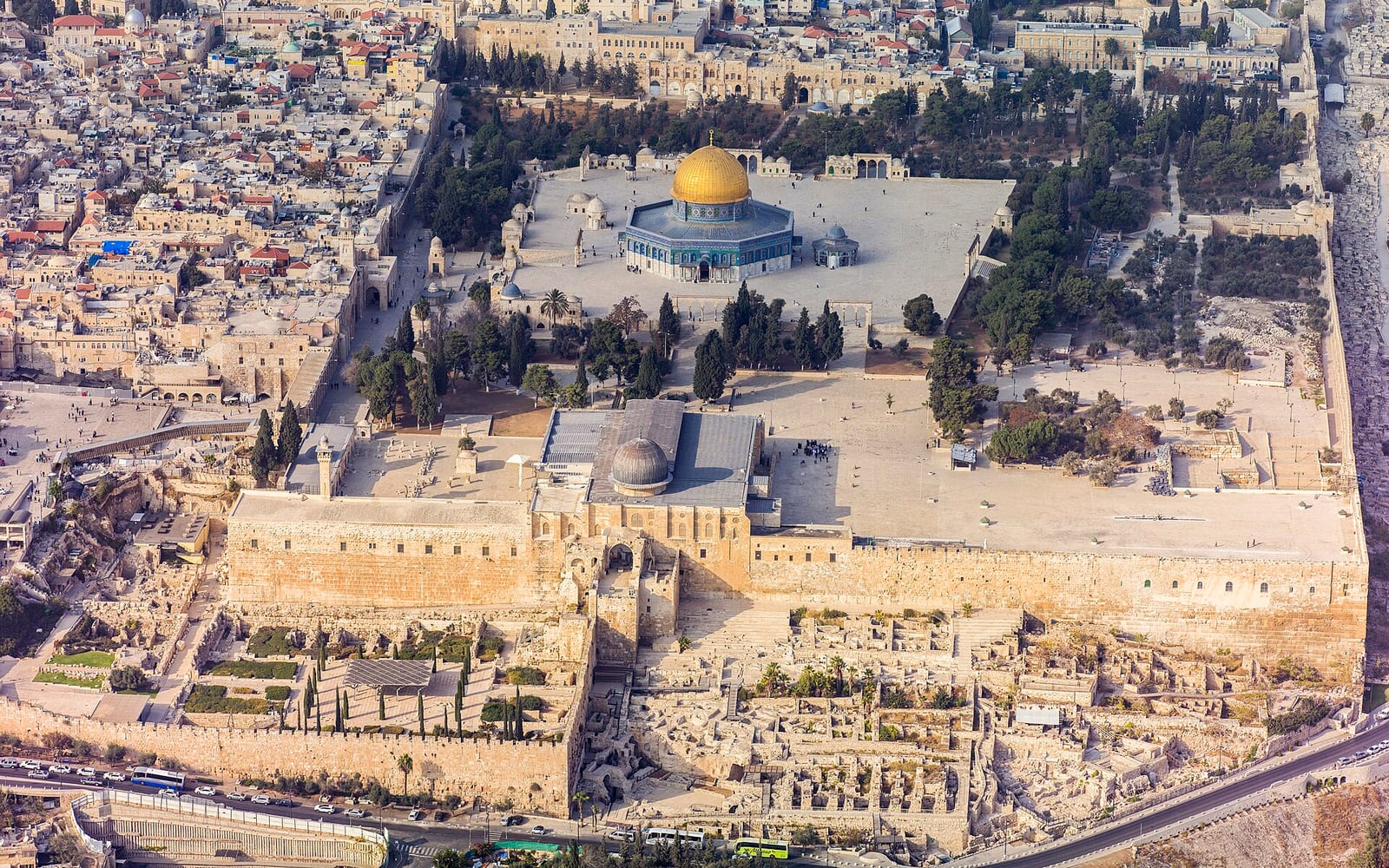
Walking the top of Jerusalem’s Old City walls is one of the most distinctive and crowd-escaping experiences in a city that is rarely short of crowds at ground level. From the top of the Suleiman walls — built in the 1530s by Ottoman Sultan Suleiman the Magnificent on Crusader and earlier foundations — you look simultaneously into the Old City’s four quarters below and out across the rooftops toward Mount of Olives, the Hinnom Valley, and West Jerusalem. The Ramparts Walk exists in two separate routes, both beginning at Jaffa Gate.
What is the Ramparts Walk?
The Jerusalem Ramparts Walk (Hebrew: Halicha Al HaHomot) follows the wall-top path of the Ottoman-era city walls that enclose the Old City. The walls are approximately 4 kilometres in total length; the two routes cover most of this circuit, with the section adjacent to the Temple Mount/Haram al-Sharif permanently closed.
The walk is managed by the Jerusalem Development Authority and the Tower of David Museum. Tickets are purchased at the Jaffa Gate entrance near the Tower of David.
The two routes
North Route — Jaffa Gate to Lions’ Gate
Distance: approximately 1.5 km wall-top · Duration: 1.5 hours at a comfortable pace
The north route runs from Jaffa Gate eastward, passing above the Christian Quarter (views into the rooftop ecosystem of churches, bell towers, and domed chapels) before turning north and looking down into the Muslim Quarter below. The section above Damascus Gate is the highlight of this route: from the wall, you look directly into the vast plaza below Damascus Gate’s Ottoman arch — one of the most active and atmospheric corners of the Old City, with market activity, traffic, and crowds visible as a living city below you.
The route ends at Lions’ Gate (St. Stephen’s Gate), a short walk from the Garden of Gethsemane and the start of the Via Dolorosa. This makes the north route a natural opening to a Christian-quarter walking day.
Photography focus: Muslim Quarter roofscape, Damascus Gate plaza (best midday light from above), views north toward East Jerusalem.
South Route — Jaffa Gate to Dung Gate
Distance: approximately 1.5 km wall-top · Duration: 1.5 hours at a comfortable pace
The south route runs from Jaffa Gate southeast, passing above the Armenian Quarter — Jerusalem’s smallest quarter, largely quiet and residential, with the rooftops of the St. James Cathedral complex visible below. Continuing east above the Jewish Quarter, the path reaches its most iconic viewpoint: Zion Gate (recognisable by its bullet-pocked walls from the 1948 battles), with views toward Mount Zion and the Diaspora Yeshiva. Closer to Dung Gate, the route passes points where the Western Wall plaza becomes visible far below — a striking view of one of the world’s most visited prayer sites, seen from an angle almost no other vantage point offers.
The route ends at Dung Gate, the main pedestrian entry to the Western Wall plaza — so the south route makes a natural pairing with a Western Wall visit.
Photography focus: Zion Gate, Armenian Quarter rooftops, Mount Zion, Western Wall plaza aerial view (south-facing late afternoon light is excellent).
Tickets and practical access
Tickets are sold at the Tower of David Ticket Office near Jaffa Gate. Hours and pricing for summer 2026:
| Option | Approx. price |
|---|
| Single route (north or south) | ₪25 |
| Combined ticket (both routes) | ₪35 |
| Combined with Tower of David Museum | check at kiosk |
The north route section from Jaffa Gate to New Gate has extended summer hours to 21:00 (Sunday to Thursday) in 2026, making an evening walk possible. The full route reverts to standard hours (closing approximately 17:00) outside this section. Verify at the Tower of David kiosk or the Jerusalem Development Authority website before arriving.
Entrance point: the single entry for the Ramparts Walk is at Jaffa Gate, beside the Tower of David. There is no entry from other gates along the wall’s length.
Photography tips
- Golden hour (the hour before sunset) transforms the limestone walls and rooftops into warm amber. The extended evening hours on the north route make this achievable.
- Morning light (09:00–10:30) is best for east-facing views, particularly looking toward Mount of Olives on the south route.
- Damascus Gate from above (north route): midday when the plaza is most active gives the best photographic depth to the market below.
- Bring a wide-angle lens or use your phone’s ultra-wide mode — the wall-top parapet limits tight compositions; wider views are more effective.
- The Eastern view sections have more compression-friendly telephoto opportunities (Mount of Olives, Hinnom Valley).
Combining the Ramparts Walk with other Old City visits
South route pairing: end at Dung Gate → walk immediately to the Western Wall (free, 5-minute walk) → continue to the Jewish Quarter and Cardo Maximus → return via Jaffa Gate through the Armenian Quarter. Half-day minimum.
North route pairing: end at Lions’ Gate → walk the Via Dolorosa toward the Church of the Holy Sepulchre → exit through Jaffa Gate in the afternoon. Full morning.
Full day: walk both routes (3–3.5 hours total) + morning in the Muslim Quarter shuk + afternoon Tower of David Museum. This is a physically demanding full day on uneven stone; wear proper footwear, hydrate, and allow rest time in between routes.
For those who prefer a guided experience that contextualises the wall, the Old City, and its historical layers simultaneously, see the Jerusalem Old City walking tour guide.
See also
Jerusalem Old City walking tour · Tower of David Museum guide · Western Wall visitor guide · Via Dolorosa guide · Best hotels in Jerusalem · 1-day Jerusalem itinerary · Jerusalem neighbourhoods guide