January is Israel’s least visited month — and for the right traveller, that is entirely the point. The post-Christmas quiet has settled over Jerusalem, where the Old City holy sites are accessible without the queues that define every other season. Eilat glows with winter sun while the north wraps itself in rain and green. And the Negev — cool, dry, and uncrowded — offers some of the most rewarding desert hiking in the country.
January in three modes
Winter sun and water (Eilat, Dead Sea): The Red Sea is at its clearest in January; Eilat’s domestic season is at its peak. The Dead Sea sits at comfortable floating temperatures with far less international tourist pressure than spring or summer. Both destinations justify a January trip on their own terms.
Off-peak culture and cities (Jerusalem, Tel Aviv): Jerusalem in January is quieter than at any other time of year. The major holy sites — the Western Wall, the Church of the Holy Sepulchre, the Via Dolorosa — are navigable without the crowds that define April through August. Hotel rates in both cities are at their annual lows.
Active Israel (Negev, Galilee, Golan): January is one of the three prime months for Negev hiking — cool enough for sustained outdoor effort, clear-skied, and genuinely dramatic in the desert landscape of the Ramon Crater and Ein Avdat. Mount Hermon may have skiable snow. The Galilee and Golan are vividly green from winter rains, though cold and often wet.
Eilat: Israel’s Red Sea in January
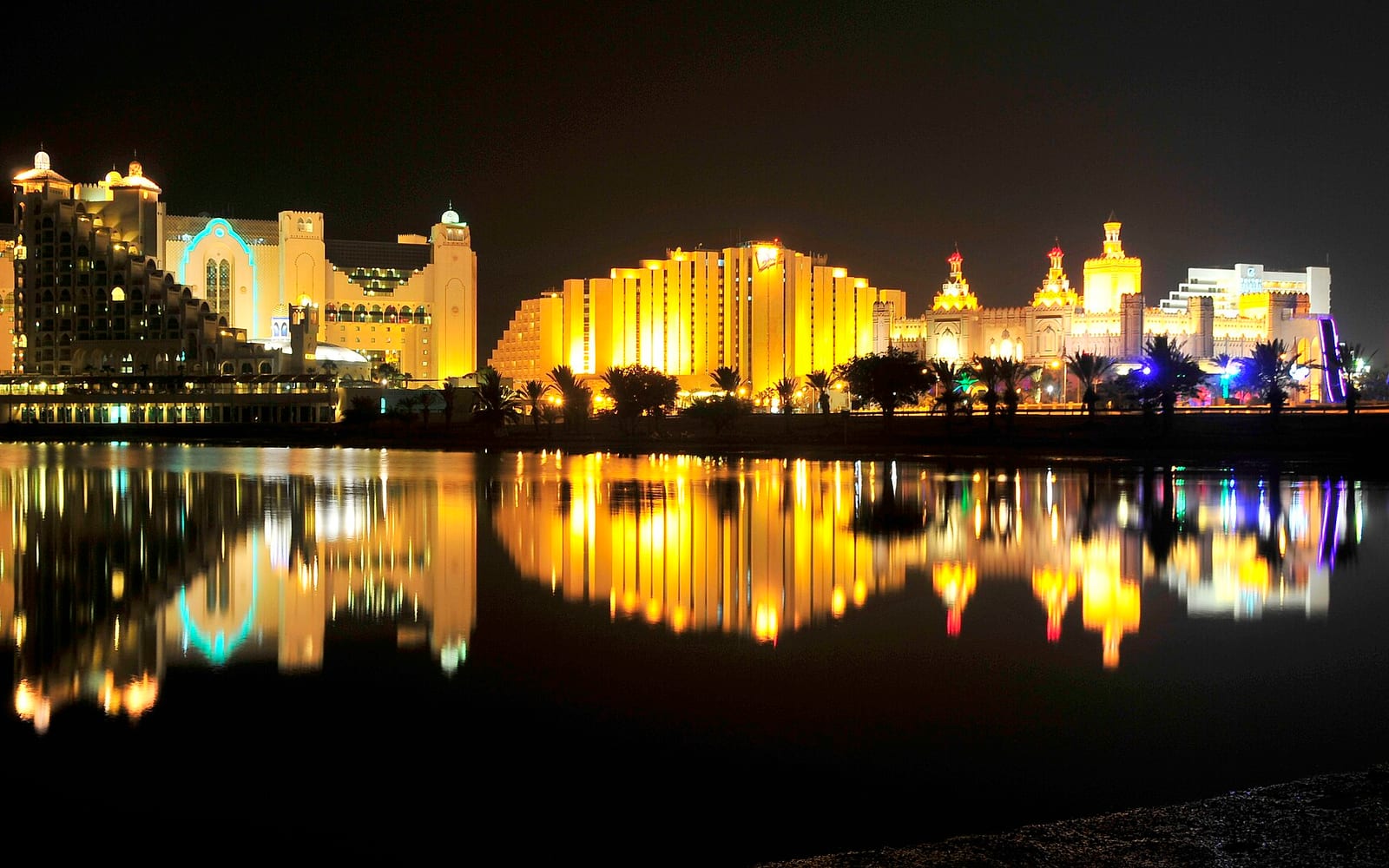
Eilat in January is the anti-winter. While northern Israel shivers in grey rain and Jerusalem’s cobblestones are slick with cold drizzle, Eilat sits at 21–24°C with near-constant sunshine and a Red Sea that reaches 22–24°C — warm enough for snorkelling without a thick wetsuit.
January is the peak of Eilat’s domestic tourist season. Israelis from Tel Aviv, Jerusalem, and the north head south to escape winter, creating a resort atmosphere that is livelier than the emptier shoulder months of May and June. The beach promenade, the North Beach hotel strip, and the dive boat operators are fully operational.
What to do in Eilat in January
Coral Beach Nature Reserve: Eilat’s protected reef snorkelling site, managed by the Israel Nature and Parks Authority. Winter water clarity in the Red Sea is exceptional — visibility reaches 20–30 metres on calm days. Entry includes access to the floating pier with ladder entry into the reef zone. Reserve a morning slot; afternoons can be windier.
Underwater Observatory Park: Eilat’s marine aquarium complex at the south end of the city. The circular glass observatory extends into the sea floor, surrounded by live reef fish without diving. The marine museum’s 800+ species are equally rewarding in January. A good option when wind makes surface snorkelling choppy.
Dolphin Reef: The free-ranging bottlenose dolphin pod in the southern bay. January conditions are calm enough for good observation from the pier; snorkel and dive sessions with the pod are available (book ahead at dolphinreef.co.il — sessions are capped). See the Eilat Dolphin Reef guide for honest expectations on dolphin interaction.
Timna National Park: 25km north of Eilat, the Timna Valley contains ancient copper mines (active since 6,000 BCE), King Solomon’s Pillars (red sandstone columns), the mushroom rock, and a short hiking circuit (3–5km) through dramatic desert geology. The park is cool in January — excellent hiking conditions. Requires a hire car or taxi; there is no public transport.
Beach and watersports: The North Beach promenade is pleasant in January without summer heat. Kitesurfing, wakeboarding, and pedalo hire operate year-round from the beach. The water temperature makes a short swim feasible; dedicated swimmers will find it comfortable for longer.
See the Eilat travel guide for neighbourhood logistics, transport, and hotel tiers.
The Dead Sea in January
January is an underrated month for the Dead Sea. Water temperature sits at 19–22°C — warm enough for the floating experience to be genuinely enjoyable rather than bracingly cold. The air temperature on the Ein Bokek resort strip reaches 20–22°C by day with cool evenings. The mineral spas and thermal pool facilities at the major resort hotels are in peak demand.
The Dead Sea is lower in international tourists in January than in spring or autumn. The main occupants are Israelis on weekend spa breaks, European winter-escape travellers, and medical-tourism visitors. This creates a more relaxed atmosphere than the April-May school holiday rush.
Caution: if Israeli school winter break falls in January (it usually runs for about a week in late January or early February — check Israeli school holiday dates for the year you’re travelling), Dead Sea hotels fill and prices rise. Book ahead if your dates coincide with Israeli school breaks.
The salt formations along the shoreline are most dramatic after winter rains, which create temporary salt crystal formations around freshwater seeps. The water level is slightly higher in winter — meaning the salt flats at the shoreline are less exposed than in summer. Wear water shoes on entry; the floor can be sharp.
See the Dead Sea guide for beach choices, floating tips, and Ein Bokek resort logistics.
Jerusalem in January
January is the single quietest month in Jerusalem for international visitors. The Christmas and New Year pilgrimage groups have departed; Easter is four months away; the Jewish holiday season is eight months away. This is the time to visit the major sites without the April-level crowds.
Temperatures: 10–14°C daytime, 4–8°C evenings. Rain is common — Jerusalem’s wettest months are December through February. Pack waterproof footwear. Jerusalem stone cobblestones become genuinely slippery in wet weather.
The upside: on clear January days, Jerusalem has a raw, cinematic quality that summer visitors never see. The Old City market (the shuk) is quieter; vendors have time to talk; the stone lanes echo rather than roar. The chance of snow — slim, perhaps one January in four sees any accumulation, and heavier snow is less frequent — is the most extraordinary Jerusalem weather event. If the forecast shows snow, the city transforms: white accumulation on Dome of the Rock gold, the Western Wall stones frosted, the Armenian Quarter silent.
Holy sites in January: The Church of the Holy Sepulchre, the Western Wall, and the Via Dolorosa are at their most accessible. Temple Mount / Haram al-Sharif is open to non-Muslim visitors on its restricted weekday schedule (Monday–Thursday, approximately 07:30–10:30 and 12:30–13:30 — verify at the time of travel as access is subject to change without notice).
Mahane Yehuda market: Full operation in January, with stalls selling seasonal produce — Jaffa oranges, pomelos, blood oranges, early almonds. Shabbat (Friday evening to Saturday night) closures still apply; Thursday evening is the most atmospheric night visit.
See the Jerusalem Old City walking tour and Western Wall guide for site logistics.
Negev and desert hiking in January
January is one of the three optimal hiking months in the Negev (the others being February and November). Temperatures in Mitzpe Ramon reach 14–18°C by day with cool nights (4–8°C). There is essentially no rain in the Negev in January — the desert is at its clearest and driest.
Ramon Crater (Makhtesh Ramon)
The Makhtesh Ramon crater rim trail (8km circuit, 3–4 hours, no technical difficulty) is excellent in January. The crater floor — accessible by 4WD vehicle or guided jeep tour — contains multicoloured sandstone, prism-shaped ammonite fossils, and volcanic field geology. January light in the Negev is softer than summer and the colours of the crater walls are at their most vivid in winter.
The Mitzpe Ramon town makes a practical base: B&Bs with jacuzzis, small restaurants, and the International Dark Sky Park designation. January nights in the Negev are genuinely cold (down to 3–5°C) but utterly clear — the Milky Way is visible on new-moon nights from the crater rim lookout points. See the Mitzpe Ramon guide for accommodation and stargazing logistics.
Ein Avdat Canyon
Ein Avdat in the northern Negev (part of the Ben-Gurion National Park complex near Sde Boker) is one of Israel’s most photographically rewarding walks: a narrow chalk canyon with a waterfall pool, Ibex frequenting the cliff ledges, and Ben-Gurion’s grave overlooking the descent. In January, the waterfall is running strongly after autumn rains. A 3-hour round trip covers the full canyon and upper viewpoint.
Galilee almond blossom
January is too early for the kalaniot anemone bloom, but the Galilee has its own January spectacle: almond trees blossom from mid-to-late January onward, with white flowers appearing before any leaves. The almond groves of the lower Galilee — particularly around Beit Shearim, the Jezreel Valley, and the Carmel ridge — produce scattered bursts of white blossom against the green winter hillsides. This is a subtle, locally appreciated phenomenon rather than a festival event.
Wildflower season: what to expect in January
Honest expectation: January is typically too early for the main kalaniot anemone bloom. The wildflower season in Israel — centred on the Negev red anemone carpets, the Darom Adom festival, and the coastal plain bloom — peaks in February and can extend into early March.
In a very warm, high-rainfall winter, a small number of early anemones can appear in coastal and southern sites by late January. But this early scatter is not the spectacle that draws visitors in February. The risk of a January wildflower trip finding no bloom is real.
If January wildflowers matter to your trip: Check daromadom.co.il in the week before travel for real-time bloom status. If the site shows no bloom activity, adjust expectations accordingly — the Negev desert is worth visiting in January for hiking and landscape regardless of bloom. If early bloom activity is reported, the coastal plain (accessible from Ashdod by public transport) is a more reliable January sighting location than the Eshkol region further south.
For the dedicated festival guide — bloom locations, shuttle logistics, security notes, and the Eshkol sites — see the Darom Adom festival guide. For the wider wildflower season across Israel — cyclamens in the Galilee, orchids in the Carmel — see the Israel spring wildflowers guide.
Tu BiShvat
Tu BiShvat — ‘the fifteenth of Shvat’ — is the Jewish New Year for trees, a minor holiday with no tourist disruption. In Israel, it is observed through tree-planting events (coordinated by the KKL-JNF across the country) and eating the seven species of biblical Israel: wheat, barley, grapes, figs, pomegranates, olives, and dates.
For visitors, Tu BiShvat is barely noticeable in practical terms: restaurants, museums, and transport operate entirely normally. No sites close. If you happen to be in the Galilee or Golan on Tu BiShvat weekend, you may encounter organised tree-planting events or school groups — a pleasant glimpse into Israeli environmental culture rather than a disruption.
Date: Tu BiShvat shifts annually with the Hebrew calendar. In 2027 it falls on 11 February. Always verify at hebcal.com.
January events calendar
New Year’s Day (1 January): The secular transition is much quieter in Israel than in Europe. Tel Aviv has some New Year’s Eve events on 31 December — bars, beachfront events, hotel parties — but January 1 is a normal working day. Most Israelis observe New Year by the Hebrew calendar (Rosh Hashanah) rather than 1 January. Tourist sites, transport, and restaurants operate normally.
Tu BiShvat (date shifts annually; typically late January or early February): Tree-planting events across Israel, particularly in the Galilee and Negev. Tourist sites open as normal.
Orthodox Christmas — Jerusalem (7 January, Ethiopian and Eastern European Orthodox; 19 January, Armenian Orthodox): Small pilgrimage events at the Church of the Holy Sepulchre for Orthodox Christmas. Far smaller scale than the Latin Rite Christmas in December. The Armenian Cathedral in the Old City’s Armenian Quarter holds a service on 19 January — notable for the rarity of access to the cathedral precinct.
Mountain bike and trail running events: January and February are when Israel’s cycling and running community is most active. The Negev and Golan see organised trail events on weekends — a background feature rather than tourist disruption.
HONESTY: Tu BiShvat and Orthodox Christmas dates shift annually — always verify at hebcal.com. No January events create meaningful tourist disruption. Wildflower bloom timing depends entirely on winter rainfall — do not rely on any fixed January bloom date.
Practical January planning
Weather by region
| Region | Daytime | Evening | Conditions |
|---|
| Eilat / Red Sea | 21–24°C | 13–15°C | Sunny, reliable; Israel’s warmest in January |
| Dead Sea | 20–22°C | 10–14°C | Mild, mostly sunny; occasional cold wind |
| Negev (Mitzpe Ramon) | 14–18°C | 3–8°C | Cool and dry; ideal hiking; cold nights |
| Tel Aviv / coast | 14–18°C | 9–13°C | Mild to cool; frequent rain and grey periods |
| Jerusalem | 10–14°C | 4–8°C | Cold; regular rain; rare chance of snow |
| Galilee / Golan | 8–13°C | 4–8°C | Cold and wet; green; hiking requires waterproofs |
What to pack
Eilat: Light clothing, swimwear, SPF 50+ (UV remains significant in winter sun). A light jacket or fleece for evenings and early morning boat trips.
Dead Sea: Swimwear, water shoes (essential for salt-crystal shoreline), SPF 50+. An old swimsuit — salt will bleach fabric over time.
Jerusalem and Tel Aviv: Warm layers, a waterproof outer layer, and waterproof footwear. Cobblestones become dangerously slippery in wet weather. Pack warmer than you would for Tel Aviv — Jerusalem is 5–8°C colder on average.
Negev hiking: Layers for day temperature swings (potentially 14°C differential between midday and sunset). A warm insulating layer for evenings; full cold-weather gear if staying overnight in Mitzpe Ramon.
Religious sites: Covered shoulders and knees at all times — regardless of outside temperatures.
Booking priorities
- Eilat hotels: 4–6 weeks ahead; January is peak domestic season and resort hotels fill, particularly on Israeli school break windows
- Dead Sea resorts: 2–4 weeks ahead normally; more if Israeli school breaks coincide
- Jerusalem and Tel Aviv: Good availability; 1–2 weeks usually adequate; boutique hotels on popular streets can still fill on weekends
- Negev B&Bs (Mitzpe Ramon): 2–3 weeks ahead; the town has limited accommodation and fills on hiking weekends
Where January fits in the bigger picture
- Israel in winter (December–February): the full three-month seasonal overview — what to expect across January’s context in the winter arc
- Israel in December: Hanukkah, Christmas in Bethlehem and Nazareth, and the quieter pre-January window
- Israel in February: kalaniot wildflower bloom, Darom Adom festival, Mount Hermon skiing, and the wildflower season that January only hints at
- Eilat travel guide: Red Sea resort logistics, hotel tiers, Timna Park, and Dolphin Reef
- Dead Sea guide: floating tips, Ein Bokek resort map, mud treatment logistics, and what to bring
- Mitzpe Ramon guide: Ramon Crater hiking, dark-sky stargazing, Negev overnight logistics
- Mount Hermon ski guide: ski lifts, rental, how to check snow conditions, and getting there from Tel Aviv
- Israel spring wildflowers guide: kalaniot bloom locations, species calendar, and what January usually offers (spoiler: very little)
- Best time to visit Israel: how January compares across the full 12-month planning matrix