December, January and February are Israel’s rainy season in the north and the sunny season in the south — which means winter in Israel is genuinely two different trips depending on where you go. The Dead Sea and Eilat reach their comfortable peak; Jerusalem and the Galilee are green, atmospheric, and priced at their cheapest. The anemone wildflower bloom in the Negev peaks in February. Christmas week in Bethlehem is unlike anywhere else on earth. This guide covers the full picture.
The winter split: south vs north
Israel’s winter divides roughly along latitude. The rule:
South of Be’er Sheva → warm, dry, and excellent. The Dead Sea, Eilat, and the Negev are in their best season. Temperatures sit at 20–26°C, rain is rare, and the infrastructure operates normally. The Dead Sea float is comfortable at any hour of the day rather than only at dawn. Eilat’s Red Sea reef is the clearest it gets all year.
North of Be’er Sheva → cool, green, and wet. Jerusalem, Tel Aviv, the Galilee, and the Golan Heights receive their annual rainfall between November and March. Jerusalem (750–850m altitude) is genuinely cold — 8–14°C days — and can see 5–10 rainy days per month in January. Tel Aviv is milder (12–18°C) and less rainy than Jerusalem but still sees grey days. The Galilee and Golan are often overcast and green. The upside: hotels in Jerusalem and Tel Aviv are at their cheapest of the year (30–50% less than August), crowds are at their lowest, and the Old City in winter has an atmospheric quietness that July simply cannot offer.
The most effective winter itinerary runs this split deliberately: start in Jerusalem (tolerating the rain for the uncrowded Old City experience and the lowest hotel prices), move south to the Dead Sea and Negev for the warm-and-sunny stretch, then finish in Eilat — or reverse it.
Six winter-specific reasons to visit
1. Christmas in Bethlehem and Nazareth
Winter is the only time to experience Christmas as a lived event in the places where it originated. Catholic Christmas (December 24–25) centres on the Church of the Nativity in Bethlehem: the Latin Patriarch processes through Manger Square to Midnight Mass, broadcast globally. Orthodox Christmas (January 6–7, Julian calendar) is smaller and more intimate. Armenian Christmas (January 18–19) is the quietest of the three. Each is distinct; the Orthodox and Armenian ceremonies are preferred by visitors who want a less crowded experience.
Bethlehem is in the Palestinian Authority and requires crossing Checkpoint 300 — a brief, tourist-friendly crossing for passport holders from most countries. The process typically takes 10–20 minutes; guided tours handle all logistics. The Bethlehem visitor guide covers the crossing, the Church of the Nativity, and the surrounding attractions independently of the Christmas season.
Nazareth’s Christmas market (late November to January 1) is Israel’s largest Christmas festival and uniquely Israeli-Arab in character — an outdoor market of handmade crafts, festive food stalls, and live music in the Old City of Nazareth, Israel’s largest Arab city. Nazareth celebrates Christmas as a living tradition, not a tourist spectacle.
See the Christmas in Israel guide for full logistics: Ministry of Tourism buses, church booking requirements, Hanukkah overlap, and how to combine Bethlehem with Jerusalem.
2. The Negev wildflower bloom: Darom Adom
The kalanit (anemone) bloom is Israel’s most spectacular seasonal natural event and peaks in late January through February in the western Negev. Known as Darom Adom (“Red South”), the bloom produces carpets of red, pink, purple, and white anemones across the hillsides and fields of the Eshkol region, the Shokeda Forest, and the Judean foothills.
Timing: the bloom responds to winter rainfall — in good years it peaks in late January to mid-February; in dry years it is scattered and less dramatic. The Darom Adom festival in the Eshkol region (typically mid-January to late February) includes guided walking routes, a visitor centre with bloom tracking, and a transport network serving the main blooming areas. Check current bloom status and festival dates at daromadom.co.il — dates shift annually and depend on rainfall, so real-time tracking is essential.
Where to see blooms:
- Shokeda Forest (northern Negev) — millions of red anemones in a forested clearing; accessible, with picnic facilities
- Elah Valley (Judean foothills) — purple lupines and anemones in February–March
- Adulam-France Regional Forest (Judean foothills, near Beit Shemesh) — mixed wildflowers on a short loop trail
The bloom is genuinely spectacular in a good year and one of the most-photographed events in Israel. Combine a wildflower morning with an afternoon in Mitzpe Ramon or the Ramon Crater (90 minutes south). See the wildflowers and kalanit season guide for a full breakdown of sites, cyclamen locations, and the Darom Adom festival logistics.
3. Dead Sea and Eilat in peak comfort
The Dead Sea is at its best in winter. The 42°C extremes of July are replaced by a comfortable 20–24°C: the float is pleasant at any hour rather than only at dawn, the Ein Bokek beach hotels run shoulder-season rates outside the Jewish holiday windows, and the sunset over the Jordanian mountains in low winter light is beautiful.
Eilat is fully in peak season from December through March — the Red Sea resort city becomes a warm-weather escape for Israeli families and European sun-seekers when the rest of the country shivers. The Red Sea water temperature holds at 22–23°C year-round, the coral visibility at Coral Beach Nature Reserve is at its clearest (summer algae growth subsides), and the Underwater Observatory and Dolphin Reef operate normally. Advance booking is essential for Eilat accommodation in December–January — prices are 40–80% higher than summer for the same hotel.
See the Dead Sea visitor guide and Eilat travel guide for beach logistics. Combine both on a south-loop itinerary: Jerusalem → Dead Sea → Masada → Negev → Eilat.
4. Mount Hermon skiing
Israel’s only ski resort sits at 2,814m in the Golan Heights and opens for winter sports when snow conditions allow — typically late December through late February or early March. The Hermon Ski Resort covers around 45km of marked runs (beginners through advanced) with chair lifts rising to 2,050m, a ski school, and full rental equipment.
For Israeli families, a ski day on Mount Hermon has a novelty and emotional resonance that most don’t experience anywhere else — the combination of Middle Eastern sunshine and genuine Alpine skiing is unusual by any measure. For visitors, it adds a genuinely unexpected dimension to an Israel itinerary.
Practical: conditions vary significantly year to year — check skihermon.co.il before committing. The mountain is approximately 2.5 hours from Tel Aviv, 1.5 hours from Tiberias, and 1 hour from Kiryat Shmona. See the Mount Hermon skiing guide for day-trip logistics, lift passes, and what to pack.
5. Jerusalem Old City in winter quiet
The Old City in January is as peaceful as it ever gets. The pilgrim tour groups of spring and the Israeli school holiday crowds of summer are absent. The Western Wall, Via Dolorosa, Church of the Holy Sepulchre, and the Muslim Quarter are genuinely navigable without the bottleneck crowds of peak season. The stone walls and alleyways glow differently in winter light — lower sun angles, less harsh contrast, more atmospheric photography.
Rain days are the trade-off. Jerusalem averages 100–130mm of rainfall in January — one of its rainiest months. Many visitors use a rain-day schedule: morning outdoor sites when dry, afternoon at Yad Vashem, the Israel Museum (Shrine of the Book), the Bible Lands Museum, or the Jewish Quarter archaeological sites (the Cardo, Burnt House, Wohl Archaeological Museum — all covered). The underground Western Wall Tunnel Tour is an excellent wet-weather option.
The Jerusalem museums guide covers the full range of covered options. The Christmas in Israel guide covers the December-specific dimension of the Old City.
6. Hanukkah: a very Israeli festival of light
Hanukkah falls in late November or December (date shifts annually by the Hebrew calendar; check exact dates at chabad.org/holidays). It is an eight-day festival of lights: every evening, another candle is added to the hanukkiah (menorah) in homes and public spaces. Unlike Christmas, Hanukkah is not a major public holiday — businesses and transport operate normally — but the atmosphere it creates is distinctly Israeli.
What to expect: street menorahs in every neighbourhood, sufganiyot (jam-filled doughnuts) in every bakery and café, and in some Jerusalem quarters the menorahs are placed in glass cases outside front doors (a Sephardic tradition intended for public display). The Machane Yehuda market in Jerusalem and the Carmel Market in Tel Aviv are at their most atmospheric in the evenings during Hanukkah. Tel Aviv hosts public Hanukkah events and menorah-lighting ceremonies on Rabin Square and Dizengoff Square.
Region by region: winter highlights
Tel Aviv and the coast
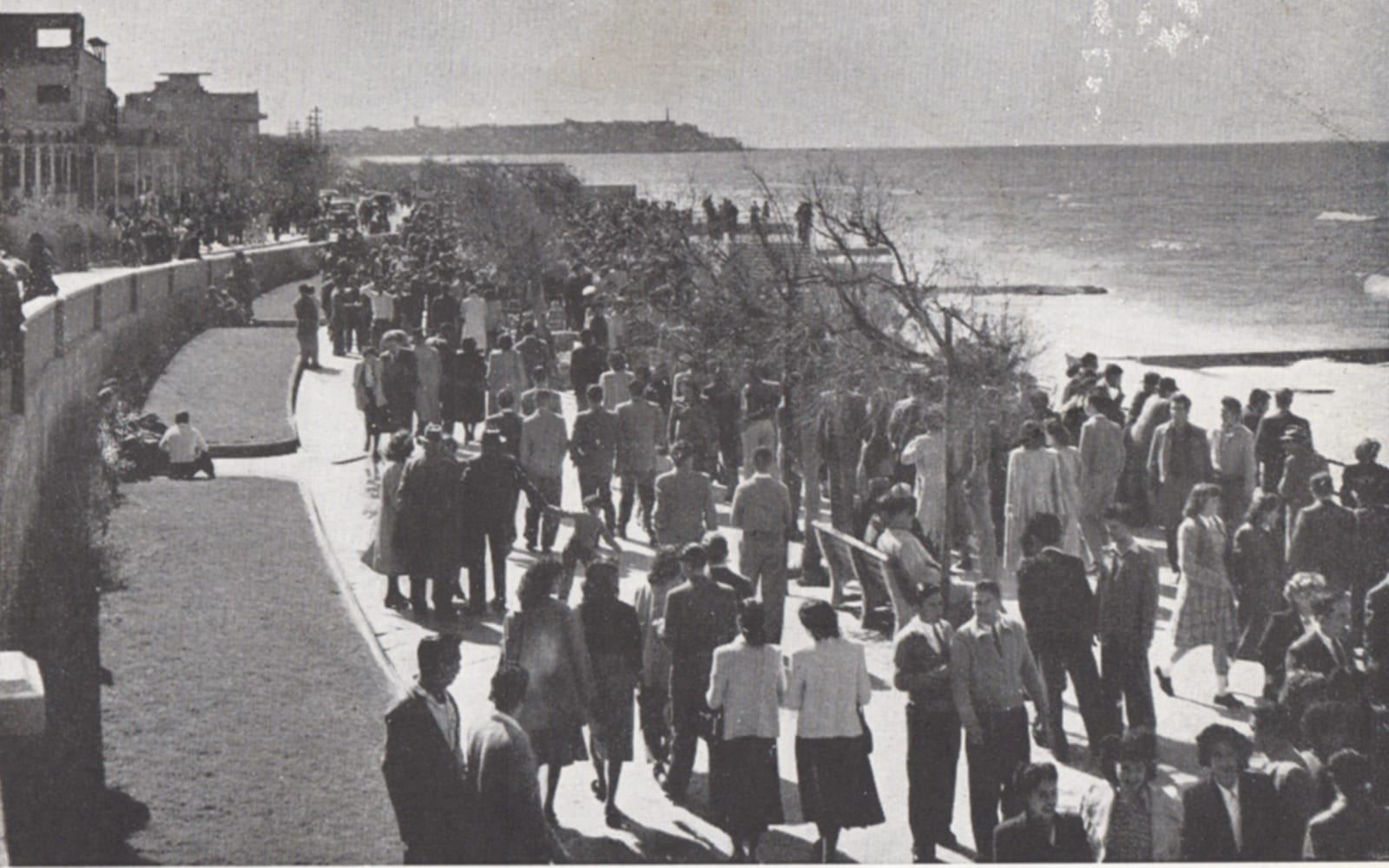
Tel Aviv in winter is mild (12–18°C), rarely heavily rainy, and genuinely pleasant to walk. The beach is empty of swimmers but the promenade (Tayelet) remains one of the most enjoyable walks in the country: joggers, cyclists, and weekend families, with the winter sea — greyer, choppier, more dramatic than in summer — visible the entire way.
The food scene is fully open (most TLV restaurants operate year-round). The Carmel Market and Nahalat Binyamin craft market run on their regular schedules. The Tel Aviv Museum of Art, ANU Museum of the Jewish People (Ramat Aviv), and Eretz Israel Museum make excellent rainy-day afternoon programmes. See the Tel Aviv food guide for year-round restaurant recommendations.
Prices: January is the cheapest month of the year in Tel Aviv. Hotels run 30–50% below August rates; apartments and boutique guesthouses are particularly good value.
Jerusalem
Jerusalem in winter is cold, atmospheric, and uncrowded. Dress for 8–14°C days and 2–8°C nights — warmer than a European winter but genuinely cold for a site-heavy itinerary requiring hours outdoors. A waterproof jacket is non-negotiable; multiple warm layers for evenings.
The Old City in January is perhaps at its most genuinely historic — fewer people, longer sight lines, quieter markets. The Mahane Yehuda market operates fully and is at its most warm and social in cold weather (market stalls, indoor bars opening at dusk). Yad Vashem is open year-round and is best visited on a cool, overcast day when the outdoor memorial garden is less harsh.
Snow: Jerusalem averages 5–10 days with snow accumulation each winter (though not every year). January and February are the peak probability months. Snow transforms the Old City walls and the Valley of Hinnom in a way that is worth waiting for — but arrival timing cannot be planned around it. Monitor ims.gov.il for 7-day forecasts during your trip window.
Dead Sea
The Dead Sea in winter is excellent — 20–24°C air temperature, warm water (22°C), low crowds, and lower hotel prices outside the Hanukkah and New Year school holidays. The Ein Bokek beach facilities operate year-round. The flat morning light over the water in winter is beautiful for photography, and the Jordan mountains across the water take on rich blue and amber tones in the low winter sun.
Combine with Masada: the Masada Snake Path is fully hikeable in winter (unlike the 10am–4pm summer closure), and a sunrise ascent in December or January is one of the most atmospheric in Israel — clear winter air, no heat risk, spectacular light on the fortress walls. See the Masada visitor guide for sunrise logistics.
Galilee and the Golan Heights
The Galilee is green and wet in winter — the forests of the Upper Galilee, the Sea of Galilee, and the Golan plateau all respond visibly to winter rain. The Sea of Galilee fills after dry years; the waterfalls at Nahal Arugot, Banias, and Nahal HaKibbutzim run strongly. Water hiking in winter is not recommended (flash flood risk), but the Galilee waterfall circuit — Banias, Ayun Reserve, Daliyot stream — is at its most dramatic December through February.
The Hula Valley crane migration peaks in November but residual flocks of cranes, pelicans, and wintering ducks remain through January. Birdwatching at Agamon HaHula remains excellent through February. See the birdwatching guide for the full winter birdwatching calendar.
Winter temperatures in the Golan plateau (700–1,000m altitude) drop to 0–5°C at night and 5–12°C in the day — genuinely cold. Pack accordingly if visiting the Golan in January. Mount Hermon’s ski resort is the Golan’s main draw in winter.
Eilat
Eilat is unequivocally at its best from November through March. The Red Sea resort strip (North Beach promenade) operates at full capacity; the Coral Beach Nature Reserve coral is at its clearest; and the Timna Park, 30km north, is comfortable for all-day visits at 18–24°C. Whale shark and manta season begins in winter — Eilat’s dive operators offer specific pelagic dives when conditions are right.
Book ahead: Eilat is peak season in winter. Beachfront hotels book up weeks ahead during school holidays (Hanukkah, winter half-term, New Year). The Eilat travel guide covers accommodation tiers and the full activity landscape. For diving, see the Eilat diving and snorkelling guide.
What to pack for winter Israel
| Item | Jerusalem / Galilee | Dead Sea / Negev | Eilat / Red Sea |
|---|
| Waterproof jacket | Essential | Optional | Not needed |
| Warm mid-layer (fleece) | Essential | Useful (evenings) | Not needed |
| Swimwear | No (sea too cold) | Yes | Yes |
| Walking shoes (waterproof) | Essential | Useful | Sandals fine |
| Sunblock 50+ | Yes (UV still high) | Yes | Yes |
| Sunglasses | Yes | Yes | Yes |
Note: Jerusalem evenings in January can drop to 2–4°C — pack a proper warm mid-layer, not just a windbreaker. Eilat evenings in December are 15–18°C; a light jacket is enough.
Budget: winter is Israel’s cheapest window for the north
| City | Winter (Jan) vs Summer (Aug) |
|---|
| Jerusalem | 30–50% cheaper in January |
| Tel Aviv | 25–40% cheaper in January |
| Dead Sea (Ein Bokek) | Similar or slightly less than summer |
| Eilat | 40–80% more expensive December–February |
Flights from Europe and North America in January (excluding the first week of the year) are among the cheapest of the calendar — 30–50% less than August fares in most years. The Eilat exception: flights direct to Eilat’s Ramon Airport are in high demand from December onwards.
Sample winter itinerary (9 days)
| Day | Base | Focus |
|---|
| 1 | Tel Aviv | Arrive; promenade walk; Jaffa dinner |
| 2 | Tel Aviv | Carmel Market + ANU Museum Ramat Aviv |
| 3 | Jerusalem | Old City (all day); Western Wall at dusk |
| 4 | Jerusalem | Yad Vashem + Israel Museum (Shrine of the Book); Mahane Yehuda market evening |
| 5 | Bethlehem | Half-day trip: Church of the Nativity + Manger Square |
| 6 | Dead Sea | Masada sunrise + Dead Sea float afternoon; Ein Bokek |
| 7 | Negev | Mitzpe Ramon crater rim; wildflower Negev drive (Feb: anemone route) |
| 8 | Eilat | Coral Beach snorkel + Dolphin Reef |
| 9 | Eilat | Departure via Ramon Airport or return to TLV (2hr drive) |
Days 5–9 require a rental car or organised transfers. Days 1–4 are walkable or by train. See the car rental guide for winter rates.
See the Israel in December guide for the full Hanukkah + Christmas month breakdown. See the Israel in January guide for Eilat at its peak domestic season, Dead Sea floating in quiet conditions, and the Negev hiking calendar. See the Israel in February guide for kalaniot anemone season, Mount Hermon skiing, Dead Sea floating conditions, and lowest hotel prices. See best time to visit Israel for how winter compares with the full year, Israel events and festivals for the Hanukkah and Purim calendar, and first time in Israel for the planning essentials.