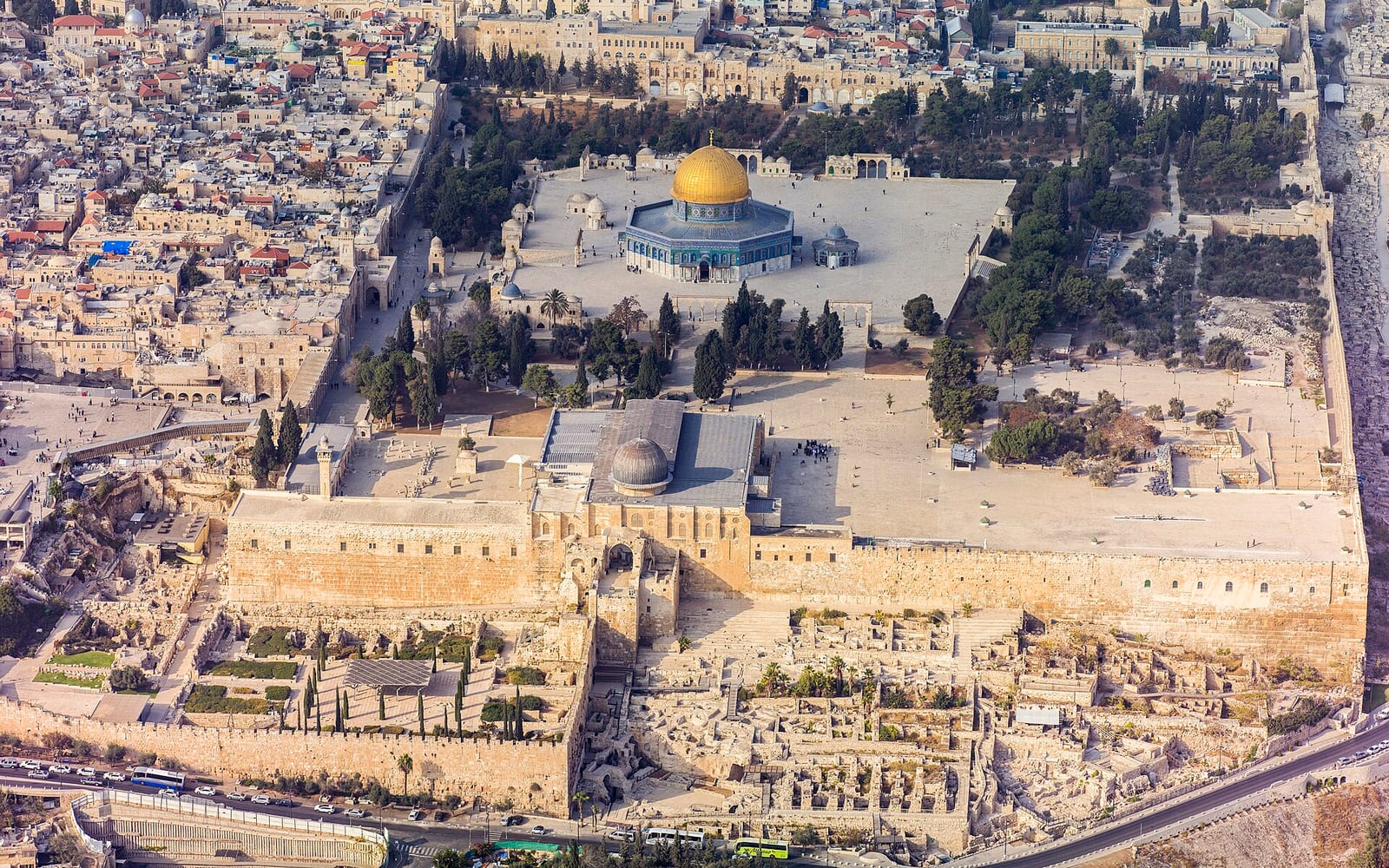
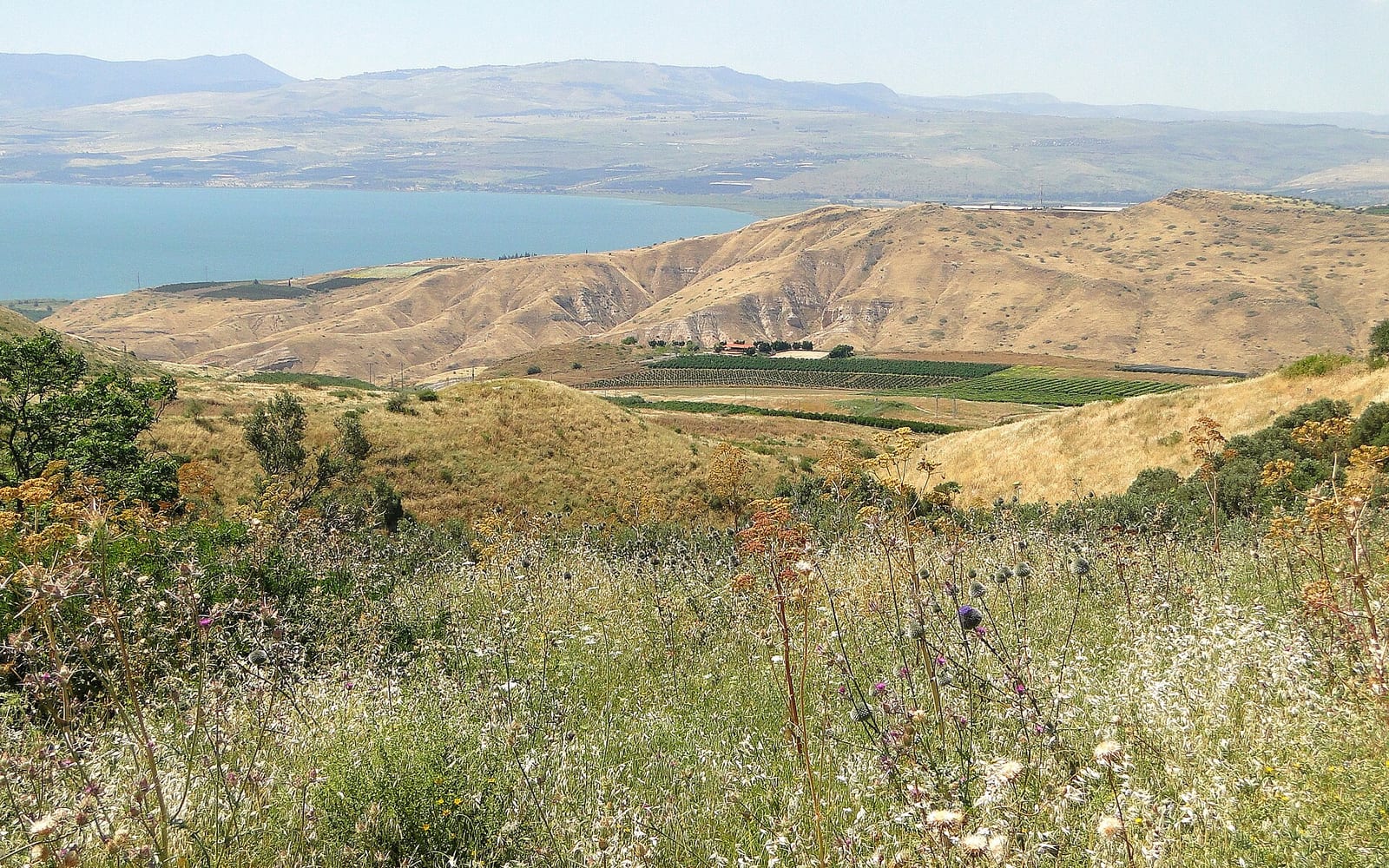
Israel has a short, intense country — and its travel calendar follows suit. Passover fills Jerusalem in April; the High Holidays send Israeli families to every corner in September; summer turns the coast into one long beach party. The month you travel will shape your budget, your pace and which experiences are possible. Below is a practical breakdown of all 12 months, using 30-year climate averages (actual conditions vary).
January — quiet, affordable and sometimes dramatic
Weather: Tel Aviv day 17°C / night 11°C; Jerusalem day 13°C / night 7°C; Jerusalem occasionally sees snow (2–3 days on average), always exciting, closing some roads. Dead Sea and Eilat are warm and sunny at 21–23°C.
Crowds: Very low. Major sites queue-free.
Price: Budget. One of the cheapest months for flights and hotels.
Holiday disruption: Armenian/Orthodox Christmas (6–7 January) brings pilgrims to Jerusalem’s Old City and Bethlehem — busy for 48 hours, then quiet.
Standout experience: Hula Valley crane migration peaks January–February with up to 500,000 common cranes — one of the world’s great wildlife spectacles.
Advance booking: Not required except for Hula Valley dawn-entry permits (book via SPNI).
Cross-link: Israel in winter · Christmas in Israel
February — wildflowers begin, still cheap
Weather: Tel Aviv day 18°C / night 12°C; Jerusalem day 14°C / night 8°C. Rain easing. Negev wildflower season begins.
Crowds: Low.
Price: Budget.
Holiday disruption: Purim falls in February or March (check the Hebrew calendar for the exact date — it shifts by several weeks each year). Purim turns Tel Aviv into a street party for 2–3 days; Jerusalem celebrations are intense in the Old City and ultra-Orthodox neighbourhoods.
Standout experience: Negev desert wildflowers — anemones and irises carpet the southern desert in a brief February–March window. Best in the area around Mitzpe Ramon and the Arava Valley.
Advance booking: Not required except for popular desert lodges during the wildflower peak.
Cross-link: Israel in winter · Negev
March — spring proper arrives
Weather: Tel Aviv day 20°C / night 14°C; Jerusalem day 17°C / night 11°C. Galilee and Upper Galilee spectacularly green.
Crowds: Low to medium — rising sharply if Passover falls in late March.
Price: Budget to mid. If Passover falls in late March, prices jump steeply for that week.
Holiday disruption: Purim (if not in February). If Passover week falls in late March — expect high prices, crowded national parks and restaurants, and many businesses offering “Passover menus” (no leavened bread).
Standout experience: Israel National Trail section hiking in the Galilee — the trail is lush and well-graded in spring, with wildflowers at elevation. The Upper Galilee from Rosh Hanikra to the Sea of Galilee is especially beautiful.
Advance booking: Hotel bookings 3–4 weeks ahead if Passover falls in March.
Cross-link: Israel in spring · Galilee
April — best weather, but Passover rules the calendar
Weather: Tel Aviv day 23°C / night 16°C; Jerusalem day 20°C / night 13°C. Mediterranean at its best.
Crowds: High during Passover and Easter (the two usually overlap). Sites are very busy.
Price: Peak during Passover week (typically 7–8 days around late March–April 25). Mid before and after.
Holiday disruption: Passover is the biggest domestic travel week in Israel — national parks, the Dead Sea, Eilat and Masada all see full capacity. Yom HaShoah (Holocaust Remembrance Day) and Yom Ha’atzmaut (Independence Day) also fall in April; both involve public ceremonies worth seeing but cause brief transport disruptions.
Standout experience: Jerusalem at Easter — the Easter procession along the Via Dolorosa, the Holy Fire ceremony at the Church of the Holy Sepulchre, and the atmospheric Old City streets during Holy Week are genuinely moving.
Advance booking: Essential 4–6 weeks ahead for Passover/Easter stays. Masada sunrise spots fill by late March.
Cross-link: Easter in Jerusalem · Passover in Israel · Masada visitor guide
May — the sweet spot
Weather: Tel Aviv day 26°C / night 19°C; Jerusalem day 24°C / night 16°C. Sea warming up.
Crowds: Medium post-Passover, rising slightly for Shavuot (50 days after Passover; check exact date).
Price: Mid.
Holiday disruption: Shavuot (Pentecost) falls in late May or early June — a 1–2 day holiday; dairy foods traditional, many bakeries run all-night events. Jerusalem’s Old City and Western Wall are especially atmospheric.
Standout experience: The Mediterranean coast — Caesarea to Akko is outstanding in May. Sea temperature reaches 22–24°C; Roman ruins at Caesarea and Akko’s Crusader city are crowd-free.
Advance booking: 2–3 weeks ahead for Shavuot stays.
Cross-link: Caesarea guide · Akko guide
June — summer begins
Weather: Tel Aviv day 28°C / night 22°C (humidity rising); Jerusalem day 27°C / night 19°C (dry heat).
Crowds: Medium–high. Israeli school holidays begin in late June, bringing families to the coast and north.
Price: Mid–high. Prices begin rising.
Holiday disruption: Minimal mid-June. School summer holidays (late June onwards) create domestic travel demand.
Standout experience: Jerusalem Festival of Light — usually June, free, the Old City’s alleyways and walls lit with video-art installations. Arrives after sunset; the Mamilla Mall and Jaffa Gate area are best reached by 8:30pm.
Advance booking: Book ahead for peak-season beach hotels.
Cross-link: Israel in summer · Jerusalem
July — peak season, peak heat
Weather: Tel Aviv day 31°C / night 24°C, very humid; Jerusalem day 30°C / night 21°C, dry; Dead Sea day 40°C+; Eilat day 42°C+.
Crowds: Peak. Israeli summer school holidays in full swing; major sites are very busy.
Price: Peak.
Holiday disruption: Tisha B’Av (Jewish fast day commemorating the destruction of the Temple; falls July or August) — the Jewish Quarter of Jerusalem’s Old City is closed to tourists for parts of the day; Western Wall particularly crowded the night before.
Standout experience: Sea of Galilee water sports and beach — Jordan River kayaking from Kfar Blum is best July–August when water levels are good. Evening waterfront dining in Tiberias is excellent.
Advance booking: Essential 6–8 weeks ahead. July books out for popular coastal hotels.
Cross-link: Israel in summer · Sea of Galilee boat tour
August — hottest month, busiest beaches
Weather: Tel Aviv day 31°C / night 25°C, most humid; Jerusalem day 30°C / night 22°C; north coast 29°C.
Crowds: Peak — Israeli school holidays plus international arrivals.
Price: Peak.
Holiday disruption: Tisha B’Av if not in July. Otherwise minimal — the Jewish calendar has a quieter stretch between Tisha B’Av and the High Holidays.
Standout experience: Tel Aviv beaches — August is the full-beach-culture experience. The Gordon Beach–Frishman strip is packed but lively; night swimming and beach bars are in full operation. The city’s food and nightlife scene is at its most electric.
Advance booking: Essential. Book August well in advance — summer fills accommodation by May.
Cross-link: Israel in summer · Tel Aviv
Weather: Tel Aviv day 29°C / night 23°C (humidity easing); Jerusalem day 27°C / night 19°C. Sea still warm at 28°C.
Crowds: High during the High Holiday weeks; very intense domestic travel.
Price: Peak during Rosh HaShanah and Sukkot; mid before.
Holiday disruption (critical): September almost always includes the Jewish High Holidays:
- Rosh HaShanah (Jewish New Year; 2 days) — most businesses and restaurants close; Western Wall overflows with worshippers.
- Yom Kippur (10 days after Rosh HaShanah) — all public transport stops for 25 hours, including buses, trains, taxis and Ubers; most roads empty except for cyclists. Plan to be in your hotel or within walking distance of sites.
- Sukkot (15 days after Rosh HaShanah; 7 days) — Israeli families build outdoor huts (sukkot) everywhere; national parks are at capacity; booking a Dead Sea or Eilat hotel for Sukkot requires months of advance notice.
Standout experience: Yom Kippur night in Jerusalem — the Old City is eerily quiet; families in white stroll traffic-free streets; the experience is profound and unexpected. Also the Western Wall at Yom Kippur break-fast is an extraordinary scene.
Advance booking: Essential 2–4 months ahead for Rosh HaShanah and Sukkot weeks. Yom Kippur itself sees no travel.
Cross-link: Jewish holidays Israel travel · Shabbat guide
October — the post-Sukkot sweet spot
Weather: Tel Aviv day 26°C / night 20°C; Jerusalem day 23°C / night 16°C. Sea remains warm.
Crowds: Low–medium after Sukkot. This is one of the quietest months once the holiday rush ends.
Price: Budget–mid. The post-Sukkot lull is genuinely good value.
Holiday disruption: Simchat Torah (end of Sukkot; 1 day) — festive synagogue celebrations; Old City in Jerusalem is joyful. After this, the calendar is clear until Hanukkah.
Standout experience: Golan Heights wineries — October is harvest season. Yarden, Assaf and Chateau Golan are all active during grape harvest; some wineries run harvest-experience events. The Golan is stunning in October light.
Advance booking: Not required mid–late October. Book Sukkot if travelling in early October.
Cross-link: Golan Heights wineries · Israel wine guide
November — quiet, affordable, beautiful
Weather: Tel Aviv day 22°C / night 16°C; Jerusalem day 18°C / night 12°C; first rains begin. Galilee dramatically green.
Crowds: Very low. Major attractions essentially queue-free.
Price: Budget.
Holiday disruption: Minimal. No major Jewish or Christian holidays mid-month.
Standout experience: Hula Valley crane migration — 500,000 common cranes funnel through the Hula Valley in November and December, one of the world’s great wildlife spectacles. Dawn flights from the roosting lake are photographically extraordinary.
Advance booking: Not required except for Hula Valley dawn-entry permits.
Cross-link: Israel in winter · Birdwatching in Israel
December — winter warmth in the south, Christmas in the north
Weather: Tel Aviv day 19°C / night 13°C; Jerusalem day 13°C / night 8°C (can be cold, occasional snow); Eilat day 23°C; Dead Sea day 21°C.
Crowds: Low (most of the month) to Very High (24–26 December in Bethlehem and Nazareth).
Price: Budget (most of month); Peak around Christmas.
Holiday disruption: Hanukkah (8 nights; falls late November or December) — giant menorahs lit in public squares across Israel; traditional sufganiyot (jam doughnuts) everywhere; the Old City is festive. Christmas period (24–26 December) brings massive crowds to Bethlehem, Nazareth and Jerusalem — book months ahead for Christmas Eve stays.
Standout experience: Midnight Mass at the Church of the Nativity in Bethlehem — tickets required months in advance from the Palestinian Authority tourism office; the experience of Christmas in the birthplace of Jesus is unlike anywhere else. See the Christmas in Israel guide for full logistics.
Advance booking: Essential for 23–26 December anywhere near Bethlehem or Nazareth. The Dead Sea and Eilat book out in December as northern Europeans escape the cold.
Cross-link: Christmas in Israel · Israel in winter · Bethlehem travel guide
Booking-calendar cheat sheet
| Month | Crowd level | Price tier | Action |
|---|
| Jan | Very low | Budget | No advance booking needed |
| Feb | Low | Budget | Book Purim period 3 weeks ahead |
| Mar | Low–Mid | Budget–Mid | Book early if Passover is late March |
| Apr | High (Passover) | Peak | Book 4–6 weeks ahead |
| May | Medium | Mid | Book Shavuot 2–3 weeks ahead |
| Jun | Medium–High | Mid–High | Book coast hotels in advance |
| Jul | Peak | Peak | Book 6–8 weeks ahead |
| Aug | Peak | Peak | Book 2+ months ahead |
| Sep | High (holidays) | Peak | Book High Holidays 2–4 months ahead |
| Oct | Low (post-Sukkot) | Budget–Mid | No advance booking needed mid–late Oct |
| Nov | Very low | Budget | No advance booking needed |
| Dec | Low (most) / Peak (Christmas) | Budget / Peak | Christmas period: book months ahead |
Weather ranges are 30-year climate averages for Tel Aviv and Jerusalem; conditions in any given year will vary. Jewish holiday dates shift each year because the Hebrew calendar is lunar-solar — always confirm exact dates before booking, and check the Shabbat calendar for weekly closures.
Not sure which month matches your interests? The interactive season picker lets you choose priorities — beaches, hiking, pilgrimage, birding, festivals — and returns a personalised month recommendation. For the seasonal overview and FAQs, see Best Time to Visit Israel.