France and Israel are both among the world’s most visited countries, and both sit within reasonable flight range of each other across the Mediterranean and Europe — yet they offer almost entirely different travel experiences. France is a vast, varied country of 68 million people: Baroque Paris, Provence lavender fields, Alsatian villages, Basque country, Alpine ski resorts and a Mediterranean Riviera all within its borders. Israel is a country the size of New Jersey where three of the world’s major religions converge in a single walled city, and where beach, desert, sea and ancient civilisation lie within a couple of hours of each other. The question of which to visit — or whether to combine both — is worth examining carefully.
Side by side
| Criterion | Israel | France |
|---|
| Best known for | Jerusalem, the Dead Sea float, Tel Aviv, the Galilee | Paris, Versailles, the Riviera, wine, cuisine |
| Historical focus | Jewish, Christian and Islamic — three world religions in one walled city | Baroque, Gothic, Romanesque, prehistoric (Lascaux); vast cultural heritage |
| Unique drawcard | Walking between the Western Wall, Church of the Holy Sepulchre and Dome of the Rock in 20 minutes | The Louvre, Eiffel Tower, Mont Saint-Michel — Europe’s defining cultural landmarks |
| Area | 22,000 km² (size of New Jersey) | 675,000 km² — Europe’s largest country by area |
| Typical mid-range daily cost | ₪600–900 / person (approx €150–230) | Highly variable — Paris = expensive; French regions significantly cheaper |
| Visa | ETA-IL (~USD 7, online before travel) | Schengen visa-free for most Western nationalities |
| Flight time from London | ~4.5 hrs (Ben Gurion, TLV) | ~1.5–2 hrs (Paris CDG) |
| Flight time from New York | ~10–11 hrs (TLV) | ~7–8 hrs (CDG) |
| English coverage | Very high in tourist areas and urban centres | Variable — strong in Paris and tourist sites; less consistent in rural areas |
| Best season | Spring (Mar–May) and autumn (Sep–Nov) | Highly regional — Paris year-round; Riviera summer; ski resorts winter; Provence May–June |
| Best for | Religious history, layered culture, compact geography, unique experiences | Art, architecture, gastronomy, wine, regional diversity, beach (Riviera), skiing |
History and culture
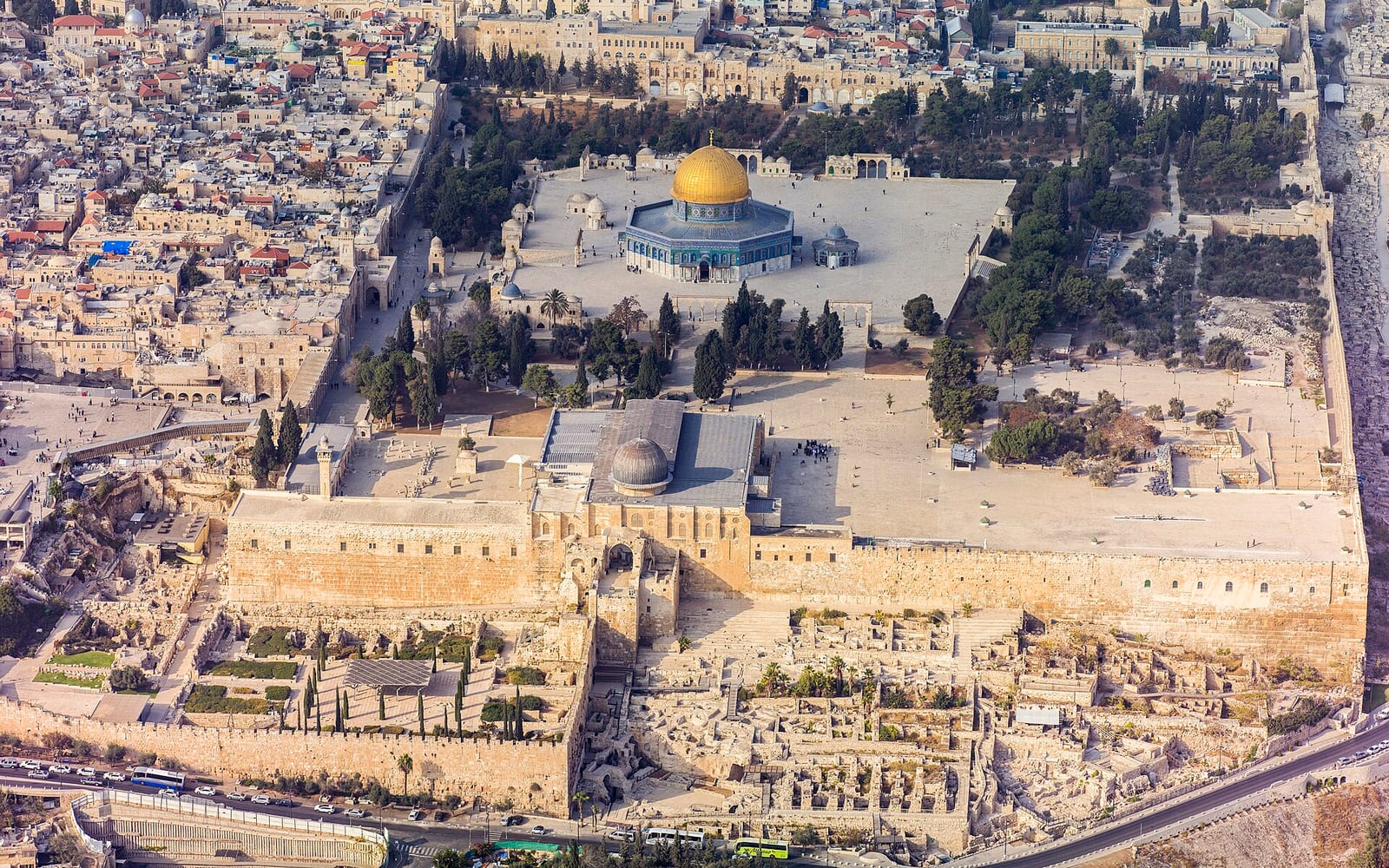
Israel compresses extraordinary civilisational depth into a very small area. In Jerusalem, you can walk in 20 minutes from the Western Wall — the holiest site in Judaism — to the Church of the Holy Sepulchre — where Christians mark the Crucifixion and Resurrection — to the Al-Aqsa Mosque and Dome of the Rock on the Temple Mount. Three of the world’s major religions share the same hilltop. Beyond Jerusalem, Masada, Caesarea, Akko, Qumran and Megiddo add Roman, Crusader, ancient Jewish and Canaanite layers within a few hours of the centre of the country. The Galilee holds early Christian sites — Capernaum, the Church of the Annunciation in Nazareth, the Mount of Beatitudes — alongside a modern wine region and the Sea of Galilee. Israeli history is multi-faith, geopolitically charged and concentrated in a way that makes even short visits feel layered and significant.
France offers a breadth of cultural heritage that no single European country rivals. The Paris art axis alone — the Louvre (the world’s most visited museum), Musée d’Orsay (Impressionism), the Centre Pompidou (modern art) and Versailles (the Sun King’s palace) — could occupy a week without leaving the capital. Beyond Paris, France’s Gothic cathedrals (Chartres, Reims, Notre-Dame), Romanesque abbeys, Alsatian half-timbered villages, the châteaux of the Loire Valley, the prehistoric Lascaux cave paintings, the Roman ruins at Nîmes and Pont du Gard, and the cliff-carved Mont Saint-Michel represent a cultural diversity that rewards months of travel. France’s art, fashion, philosophy and culinary traditions have shaped Western civilisation for centuries.
For intense, multi-faith spiritual history in a small geography — with geopolitical weight that classical art rarely carries — Israel is in a category of its own. For breadth of cultural heritage across art, architecture, history and landscape variety, France has no European equal.
Food and wine
French cuisine is the foundation of classical Western cooking. The traditions of haute cuisine, boulangeries, fromageries and regional wine culture that evolved in France over centuries have influenced professional kitchens worldwide. A proper Burgundy coq au vin, a fresh Normandy Camembert, a Lyon bouchon lunch of quenelles and andouillette, a plate of Brittany oysters with a Muscadet, or a Marseille bouillabaisse made with that morning’s catch — French regional cooking at its best is without peer in Europe. France has more Michelin-starred restaurants than any other country. French wine culture — Bordeaux, Burgundy, Champagne, Alsace, Loire, Rhône — is among the world’s most extensive and complex. For committed food and wine travellers, France is a pilgrimage destination.
Israeli cuisine is something entirely different: a mosaic of immigrant food traditions from North Africa, Yemen, Eastern Europe, Persia, the Levant and beyond, combined with a thriving contemporary restaurant scene that has made Tel Aviv one of the world’s most interesting food cities. Hummus served warm from the pot at breakfast — in a category unlike anything a European kitchen offers. Yemenite malawach flatbreads with zhug and amba, shakshuka perfected at a hundred small restaurants, sabich at a street stall, Iraqi-style kubbeh soup, fresh mezze spreads of 20 plates — Israeli everyday food is surprising, diverse and generous. Israel has one of the highest per-capita vegan populations in the world, and plant-based dining is excellent across the country. See the Israeli food and cuisine guide.
For classical fine dining and the world’s most celebrated wine culture, France wins decisively. For urban food diversity, street food creativity and genuine culinary surprise, Israel is the more interesting everyday-eating destination.
Beaches and coastline
France has a Mediterranean Riviera (Côte d’Azur) that has been the definition of European beach glamour for a century: Nice, Cannes, Antibes, Saint-Tropez and Monaco offer a mix of public pebble beaches, private beach clubs, clear water and reliable summer sun from June through September. Atlantic beaches on the Basque coast (Biarritz, Saint-Jean-de-Luz) and Brittany’s dramatic rocky coastline offer very different beach characters. La Baule, the Île de Ré and the Île d’Oléron are popular family destinations. France has beach variety across two coastlines and several seas.
Israel has Tel Aviv’s 14-kilometre urban seafront — a lively, genuinely enjoyable Mediterranean beach scene with lifeguards, beach bars and a warm social energy — and Eilat on the Red Sea with exceptional coral reef snorkelling and warm water year-round. The singular experience of floating in the Dead Sea — the world’s lowest point and saltiest major water body — is available nowhere in France or its neighbours.
For glamour, variety of coastline character and the full range of European beach types, France offers more. Israel’s Red Sea reef and Dead Sea float are experiences France simply cannot match; the Eilat coral is genuinely world-class for snorkelling and diving, and the Dead Sea soak is one of the most extraordinary physical sensations in travel.
Costs
Israel is priced at a consistent Western European level. A mid-range hotel in Tel Aviv or Jerusalem runs ₪700–1,200 per night; a sit-down restaurant meal ₪80–160 per person; a guided day tour ₪200–400 per person. Budget travel is possible with hostel accommodation and falafel-based meals, but Israel is not a cheap destination by global standards. See the Israel cost and budget guide for full tier breakdowns.
France is highly variable. Paris ranks among the most expensive cities in Europe — hotel prices in the 2nd, 7th or 8th arrondissements can rival or exceed top-end Tel Aviv, and dining in central Paris is expensive. However, outside Paris and the summer Riviera, France is considerably cheaper: mid-range hotels in provincial cities, gîtes in rural Burgundy or Provence, and village restaurants offer excellent value by Western European standards. For travellers willing to explore beyond Paris, France can be a meaningfully less expensive trip than Israel.
Nightlife
Tel Aviv is the nightlife capital of the eastern Mediterranean — clubs that run until dawn, a year-round bar scene in Florentin and Rothschild, and beach bars on the Tayelet that stay busy through winter. Tel Aviv consistently appears on international lists of the world’s best nightlife cities and is one of the most LGBTQ+-welcoming destinations in the world. See the Tel Aviv nightlife guide.
France offers multiple distinct nightlife modes. Paris has a world-class, sophisticated bar and club scene — Le Marais, Pigalle, Oberkampf and the canal Saint-Martin districts — that operates later than most northern European capitals and spans everything from jazz caves to major electronic venues. Ibiza-adjacent French clubbing culture concentrates on the Riviera in summer. French nightlife is generally more varied by region than Israel’s, but Tel Aviv as a single city has a more concentrated, internationally recognized nightlife scene.
Safety
Both countries are safe for mainstream tourists.
Israel operates a visible, pervasive security infrastructure: bag checks at major sites, armed security personnel, and a nationally coordinated emergency response. This creates a well-managed security environment for standard tourist itineraries in Jerusalem, Tel Aviv, the Galilee, the Dead Sea and Eilat. The is Israel safe guide covers the regional geopolitical context and which areas require additional planning.
France is a well-established EU destination with the safety profile of a major Western European country. Petty theft (pickpocketing) is the main practical concern for most tourists — particularly in central Paris around the Eiffel Tower, Notre-Dame, Montmartre and the metro. Scams targeting tourists near major landmarks are a known issue. Rural France and most regional cities are very safe. Check your own government’s current travel advisory for both countries.
Visas and entry
Israel (ETA-IL): Citizens of France, the EU, USA, UK, Canada, Australia and many other countries apply for an Electronic Travel Authorisation online before travel. The fee is approximately USD 7 and authorisation is typically issued within minutes. Apply at least 72 hours before departure. See the Israel visa information guide for full details.
France (Schengen): France is in the Schengen Area. Citizens of EU member states enter without formality. Citizens of the USA, UK (post-Brexit), Canada, Australia and many other countries can enter visa-free for up to 90 days in any 180-day Schengen period. Note that ETIAS — the European Travel Information and Authorisation System — was expected for non-EU Schengen visitors from 2025 but has faced repeated delays; verify its current status before travel. Verify your specific nationality’s requirements with the French immigration authority before booking.
Getting there
Israel is well served from French airports. Air France and El Al fly direct from Paris CDG to Ben Gurion Airport (TLV) in approximately 4.5 hours; Transavia also serves the route. EasyJet has operated CDG–TLV (verify current status on easyjet.com before booking). From Lyon, Marseille or Nice, connections via CDG or direct charter flights are available depending on season. The CDG–TLV route is one of the most frequently served France–Middle East connections.
France is among the most extensively served destinations in Europe, with Paris CDG as a major intercontinental hub. London to Paris takes approximately 1.5–2 hours by air or just over 2 hours by Eurostar. From New York, Paris is approximately 7–8 hours by direct flight. France’s regional airports (Lyon, Marseille, Nice, Toulouse, Bordeaux, Nantes, Strasbourg) are served by dozens of low-cost European carriers, making domestic France or France-as-stopover extremely accessible.
Who should visit Israel
- Travellers whose primary goal is experiencing multi-faith Jerusalem and three world religions in compact geography
- Those seeking experiences available nowhere else: the Dead Sea float, Eilat’s Red Sea coral reefs, the baptism site at the Jordan River
- LGBTQ+ travellers (Tel Aviv is one of the most queer-friendly cities in the world)
- First-time Middle East visitors wanting Western-standard infrastructure, reliable English, and dense historical sights in a small footprint
- Food travellers interested in one of the world’s most diverse and creative everyday-eating cultures
- Winter sun seekers: the Dead Sea, Eilat and Tel Aviv remain warm and pleasant through December–February
See first time in Israel for a practical planning overview.
Who should visit France
- Travellers whose primary goal is art, architecture and the Western cultural canon — Paris, the Loire châteaux, Versailles, Provençal villages
- Wine and fine dining enthusiasts for whom Burgundy, Bordeaux, Champagne, Lyon bouchons and Paris bistros are the trip
- Beach travellers who want the glamour and variety of the Côte d’Azur or Atlantic coastline
- Ski and mountain travellers (the Alps, the Pyrenees)
- History travellers interested in a vast, varied timeline from Lascaux prehistory to Napoleonic Europe
- Those who want a larger country to explore with significant regional diversity in a single trip
Combining both
The CDG–TLV flight is approximately 4.5 hours and available on multiple airlines year-round — one of the most practical western-Mediterranean-to-Middle-East connections available. A 14-day trip could pair a week in Israel (Jerusalem, Tel Aviv, one region — Galilee or the Dead Sea) with a week in France (Paris plus one regional area such as Provence or the Loire Valley). The two experiences complement each other in a way that few pairs do: Israel’s concentrated spiritual and archaeological depth contrasts with France’s expansive cultural geography, culinary variety and landscape diversity. Many travellers — particularly from North America — do Israel first as a “once-in-a-lifetime” destination and include Paris as a natural European stopover on the same routing.
More: First time in Israel · Best time to visit Israel · Israel costs and budget guide · Is Israel safe? · Israel visa information · Israel vs Greece · Israel vs Turkey · Israel vs Cyprus · Israel vs Egypt · Israel vs Jordan · Dead Sea visitor guide · Tel Aviv food guide · Jerusalem travel guide