July arrives in Israel with a different energy from any other month. The country is at its most internationally crowded — diaspora families converging from New York and London and Buenos Aires, Bar Mitzvah groups and camp reunion trips filling hotels, and the Israel Festival bringing world-class performers to Jerusalem’s stone venues. The Mediterranean reaches its warmest water temperature. The Sea of Galilee is 29°C for kayaking. And the heat, which must be managed rather than endured, turns every Israeli into a practitioner of the same ancient wisdom: early morning for the outdoors, midday for shade, evening for the city.
July in one idea
The key to an excellent July in Israel is scheduling around heat windows rather than ignoring them. This is not a workaround — it is the local pattern. Israelis eat breakfast by 7am, hit the beach by 8am, and move indoors by 11am. Afternoons belong to markets, museums, and air conditioning. By 5pm the city emerges again, and the late evening — dinner at 8pm, a performance at 9pm, the promenade at 10pm — is Israel at its most alive and least harried.
The Israel Festival: Jerusalem in July
The Israel Festival is one of the cultural highlights of the Israeli year — and one of the least-known internationally. Running approximately mid-July through early August (exact dates vary annually), it brings international orchestras, dance companies, chamber ensembles, and theatre productions to Jerusalem’s major indoor and outdoor venues.
Venues
Sultan’s Pool amphitheatre — The outdoor stage below the walls of the Old City is the most dramatic venue in the festival. Concerts here with the Old City walls illuminated behind the performers are unforgettable. The summer evenings at Sultan’s Pool cool significantly by 9pm — an outdoor performance starting at 9:30pm is entirely comfortable even in July heat.
Jerusalem Theatre (Binyenei HaUma) — The city’s main indoor concert hall hosts orchestral programmes, opera, and major international dance companies. Air-conditioned and appropriate for afternoon performances even in peak heat.
Huberman Hall — Chamber music and smaller ensemble performances. One of Jerusalem’s most intimate concert settings.
Jerusalem Cinematheque and outdoor cinema — Film screenings, film and music crossover programmes, and late-night outdoor screenings are part of the festival’s programme.
Free outdoor events
The Israel Festival includes free outdoor performances alongside the ticketed programme — typically in the open plazas around the First Station (HaTaHana) in the German Colony, the Talpiot arts district, and other outdoor locations. These are accessible without booking.
HONESTY: Exact festival dates, programmes, and venues change annually. Verify the current year’s schedule and booking at the official Israel Festival website before planning travel around specific performances. The Sultan’s Pool shows in particular sell out — advance booking is strongly recommended.
Sea of Galilee: July water season
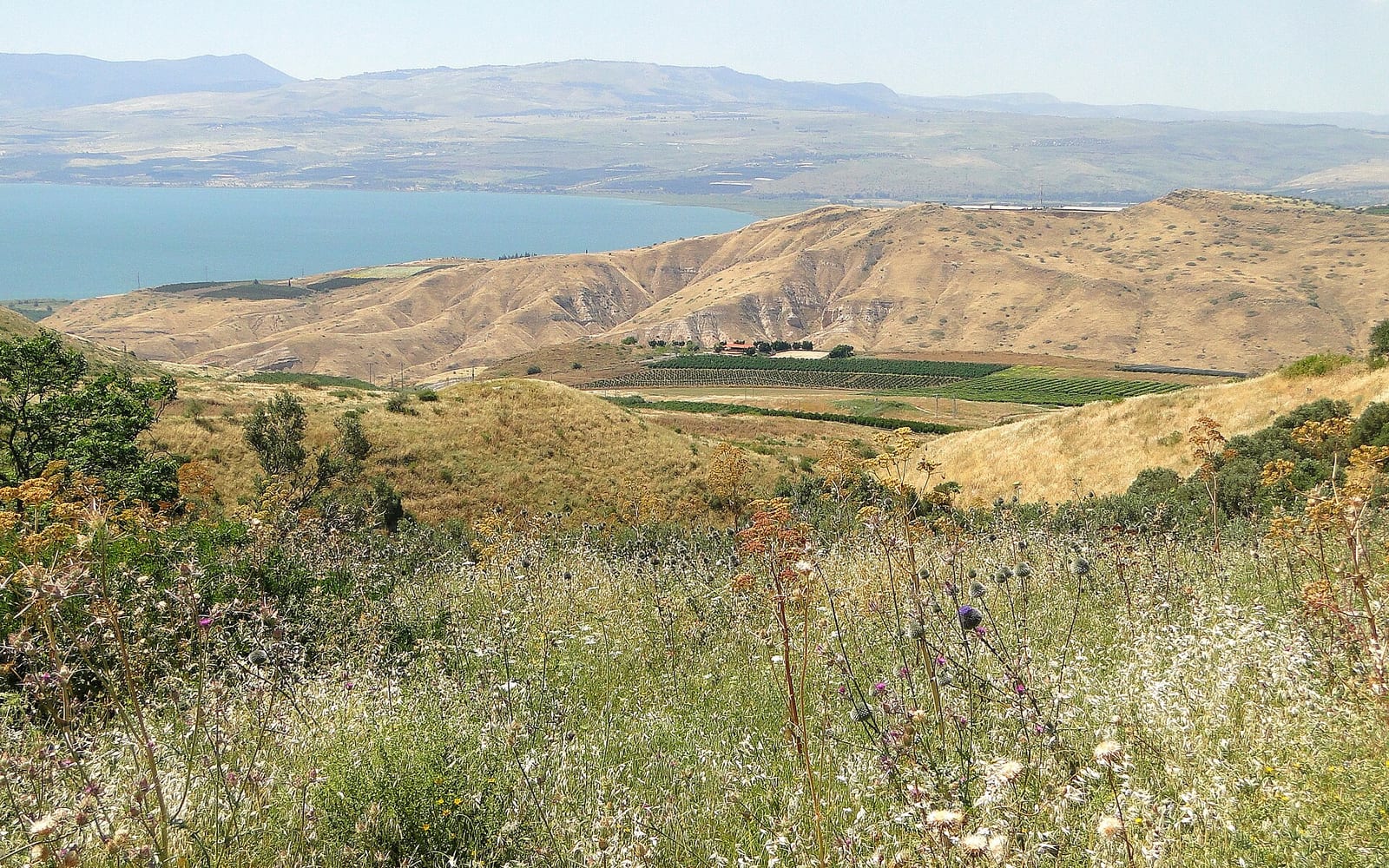
July is the warmest month on the Kinneret — the Sea of Galilee reaches 29°C, and the calm freshwater lake is Israel’s most popular water-activities destination for domestic tourism.
What to do
Kayaking and paddleboarding: Multiple operators around the northern shore — at Kibbutz Ein Gev, Kibbutz HaOn, and the Tiberias Beach area — rent kayaks and SUPs by the hour. Morning slots (before 10am) are the least crowded and most comfortable temperature-wise. A Kinneret kayak at 8am, with the hills above Tiberias still catching the early light, is one of Israel’s quietly great summer experiences.
Galilee boat trips: The historic wooden sailing boats from Tiberias Harbour offer 45-minute to 2-hour tours on the lake. The “Jesus Boat” context (first-century fishing vessel, Museum of Boat Discovery at Kibbutz Ginosar) adds historical depth to a water excursion.
Beaches: The Kinneret’s public beaches — particularly Gai Beach (Hamat Gader access road), Ofira Park, and the beach at Tiberias — fill on Israeli school-holiday Fridays and weekends. Weekday mornings are far more manageable.
For water activity logistics, see the Sea of Galilee guide and the Sea of Galilee boat tour guide.
Tisha B’Av: a uniquely moving Jerusalem experience
Tisha B’Av (the 9th of Av) is Judaism’s most mournful fast day — commemorating the destruction of the First and Second Temples in Jerusalem. In 2027 it falls on July 31–August 1; in other years it may fall in late July or early August. Verify the exact date at hebcal.com before planning.
On Tisha B’Av eve and the following morning, the Western Wall plaza fills with Jews sitting on the ground reading Kinot (lamentation poetry), surrounded by candlelight. Synagogues throughout Jerusalem hold services. The atmosphere at the Wall is one of the most emotionally resonant in the Jewish calendar — a communal expression of mourning and memory that has few equivalents in world religious practice.
For heritage-focused visitors, an evening at the Western Wall during Tisha B’Av — even observed respectfully from the periphery — is an extraordinary window into Jewish historical consciousness.
Practical notes: Most tourist sites remain open on Tisha B’Av. Jewish-owned restaurants and cafés close for the day; Arab-owned businesses (East Jerusalem, the Muslim and Christian Quarters, Akko, Nazareth) remain open. If you happen to be in Jerusalem on Tisha B’Av, plan a light day without restaurant expectations and carry your own provisions. See Traveling in Israel on Jewish Holidays for the full holiday logistics guide.
Peak diaspora season
July is the month when Israel is most intensely connected to the global Jewish diaspora. North American Jewish summer camps — based in the United States and Canada — run Israel programs throughout July. Bar and Bat Mitzvah groups from Jewish communities worldwide choose July for lifecycle milestone trips. Extended families from North America, France, the United Kingdom, Argentina, and Australia converge for reunion visits.
The effect on the country is distinct: Israel in July feels more multilingual, more internationally networked, and more energetically Jewish than any other month. The Western Wall plaza in July is the world in one space — Hebrew, English, French, Spanish, and Amharic spoken in the same afternoon crowd.
For travellers who want to experience Israel as a living Jewish civilization rather than simply as a travel destination, July offers this in abundance. For travellers who prefer quieter or more local-feeling Israel, spring (March–May) and autumn (September–November) are better choices.
Tel Aviv in July
Tel Aviv runs its summer at full urban intensity in July.
The beach
The Mediterranean coast reaches 28–29°C sea temperature — the warmest of the year, and comfortable even for long swims. The Tel Aviv beach strip (Gordon, Hilton, Frishman, Nordau, Banana, HaTzuk) operates at maximum summer capacity. The best beach experience in July:
- Arrive by 8am — before the heat peaks and before the crowds. The early morning sea light is the best photography window.
- Leave by 10am or 11am — the UV and heat become intense quickly.
- Return from 5pm — the beach empties somewhat and the evening light is excellent.
- Friday afternoon — Israeli families converge in massive numbers; the beach is at its most festive but also most crowded.
The Hilton Beach is the designated LGBTQ+-friendly stretch and is busy throughout July, particularly on Fridays. See best beaches in Israel for the full beach guide.
Evenings and nightlife
Tel Aviv evenings in July are warm (24–27°C) and heavily sociable. The rooftop scene — Norman Hotel, Aloft, and the terrace bars along the Tayelet — runs at full capacity. Dinner at 9pm on a Rothschild Boulevard terrace, when the temperature has dropped to 25°C and the city is in full motion, is the Tel Aviv summer experience at its peak. Tel Aviv nightlife covers the full evening programme.
The Nahalat Binyamin craft market operates on Tuesdays and Fridays — morning visits (8–11am) are the comfortable summer window.
Air-conditioned midday options
- Tel Aviv Museum of Art: international collection, typically open until 9pm Tuesday–Saturday
- ANU Museum of the Jewish People: one of the world’s great Jewish museums, full day programme
- Dizengoff Center and Sarona Market for indoor shopping and food halls
- Tel Aviv coffee: the café scene peaks in summer — cold brew culture is central to Tel Aviv July
Jerusalem in July
Jerusalem’s elevation (750–800m) makes it notably cooler than the coast — 28–32°C by day versus Tel Aviv’s 30–34°C, and much more comfortable 19–22°C evenings. July is manageable in Jerusalem in a way that Eilat or the Dead Sea is not.
Old City morning strategy
The Old City in July requires an early start:
- 7–10am window: the Church of the Holy Sepulchre before the tour groups arrive, the Western Wall at dawn or early morning, the Via Dolorosa in the cool of the Muslim Quarter’s stone alleys. This window is when Jerusalem’s sacred sites are at their most atmospheric — the light in July is exceptional at 7–9am.
- 10am–4pm: the Old City becomes very hot and crowded with tour groups. Move to air-conditioned options: the Jewish Quarter, the Western Wall Tunnels (underground, cool year-round), the underground Crusader Halls in Akko if day-tripping, or the Israel Museum for the Dead Sea Scrolls and the model of Second Temple Jerusalem.
- 5pm onwards: the Old City reawakens — a July evening walk through the Armenian Quarter and Mahane Yehuda market bar strip is excellent.
The Israel Festival overlap
If your Jerusalem visit coincides with the Israel Festival (mid-July through early August), the Sultan’s Pool venue — outdoor concerts with the Old City walls behind the stage — makes an evening performance one of the mandatory Israel experiences. Plan the day around an early Old City morning, afternoon rest, and an evening show. See details in the Israel Festival section above.
Galilee and Golan in July
The north offers some relief from the coastal heat: the Golan Heights at 600–1,100m elevation sits at 26–30°C in July — the coolest accessible area in the country during summer.
Golan day from Tiberias: a July Golan circuit — Banias waterfall (the spring-fed waterfall is particularly refreshing in summer heat), Nimrod Fortress ruins (1,100m elevation, breezy), and Mount Bental viewpoint — makes a strong full-day escape from the coast. Leave Tiberias by 7am; the falls are spectacular in the early light. See the Golan Heights guide.
Galilee wineries: the Galilee wine region (Galilee wineries guide) is in ferment preparation through July — not harvest season, but the winery tasting rooms are open and cool. The Dalton, Pelter, Yarden, and Chateau Golan wineries all operate visitor programmes; call ahead as July hours vary.
Nazareth: the Arab city in the lower Galilee is energetic in July — the Basilica of the Annunciation is consistently cool inside, and the Old City market (the Souk in the Old Market) has excellent summer produce. Nazareth’s restaurant scene is one of the best in the north.
What to skip or reschedule in July
The Dead Sea midday: heat at the Dead Sea in July reaches 40–43°C. The safe window is a 7–9am float. Never attempt the Dead Sea between 11am and 4pm in July. If your trip includes a Dead Sea day, plan an extremely early start and retreat to your hotel by 10am. See the Dead Sea guide for safety detail.
Masada midday: Masada on the Snake Path is fine before 7am — the summit is cool at dawn and the view in the July early light is extraordinary. After 9am, the exposed plateau is dangerously hot. Either join a 4:30–5:00am Snake Path group, or take the cable car before 8:30am and plan to be descending by 9:30am. See Masada visitor guide.
The Negev desert midday: Makhtesh Ramon crater, the Incense Route, and the desert trails of the Negev are best left to autumn and spring in the inland desert. Mitzpe Ramon town (at 900m elevation) is manageable, but crater-floor hiking in July heat is genuinely dangerous.
July events and holidays
Israel Festival (mid-July through early August, dates vary annually): performing arts festival across Jerusalem’s main venues — orchestral, dance, theatre, outdoor performances. Verify current year at the Israel Festival official site.
Tisha B’Av (9th of Av — late July in 2027; check hebcal.com for the exact date): Jewish fast day of mourning; Western Wall fills with candlelight vigils; restaurants in the Jewish sector of Jerusalem close for the day.
Nine Days: the nine days preceding Tisha B’Av are a period of Jewish mourning observance during which swimming is traditionally avoided and some Jews abstain from meat and wine (except on Shabbat). For travellers in observant Jewish communities or on Jewish-heritage tours, this is relevant context. Most tourist activities are unaffected; the Western Wall during this period carries a reflective atmosphere distinct from the rest of summer.
HONESTY: All event dates shift annually with the Hebrew calendar. Verify exact dates for any Jewish observances at hebcal.com before planning travel around them. Never plan around approximate dates alone.
Practical July planning
Weather summary
| Location | Daytime | Evening | Sea/Water |
|---|
| Tel Aviv / coast | 30–34°C | 24–27°C | 28–29°C Mediterranean |
| Jerusalem | 28–32°C | 19–22°C | — |
| Galilee / Tiberias | 33–38°C | 25–28°C | 29°C Kinneret |
| Golan Heights | 26–30°C | 18–22°C | — |
| Eilat | 37–43°C | 28–32°C | 27–28°C Red Sea |
| Dead Sea | 38–43°C | 28–30°C | 30°C (salt lake) |
UV index is extreme (10–11) throughout Israel in July. SPF 50+, a wide-brimmed hat, and loose light-coloured clothing are essential for any outdoor activity.
What to pack for July
Light summer clothing throughout — thin linen or moisture-wicking fabrics. Carry a small portable fan. Strong sunblock (SPF 50+) reapplied every 90 minutes. A lightweight long-sleeved shirt for religious sites and sun protection. Sandals for the beach and salt-crystal shoreline at the Dead Sea (closed-toe shoes for Old City cobblestones). Carry 2 litres of water minimum at all times outdoors.
Booking priorities
- Tel Aviv accommodation (July): book 6–8 weeks ahead for central locations.
- Jerusalem (July): 4–6 weeks ahead; earlier if your dates overlap with the Israel Festival.
- Galilee/Sea of Galilee: 3–4 weeks ahead for kibbutz guesthouses and waterfront hotels.
- Dead Sea / Eilat: 3–4 weeks is generally sufficient outside Israeli school breaks.
Where July fits in the bigger picture